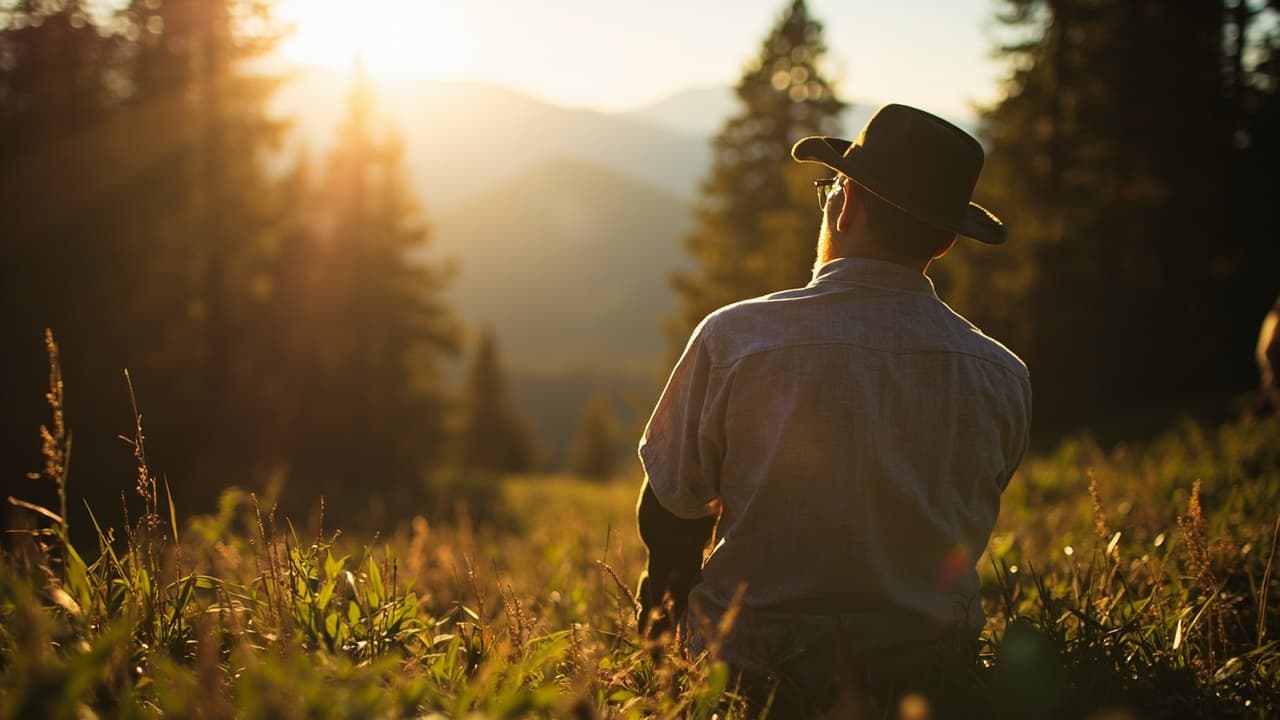
America's public lands offer millions of free camping spots. Here's how to find them without a guidebook or reservation.
How to Find Free Campsites — Quick Comparison

LifeStraw Personal Water Filter for Hiking

Wise Owl Outfitters Hammock for Camping Double Hammocks Gear

8/12/16Pack Tent Stake with Hammer

BROWEY 1600W

4" Survival Ferro Rod Drilled Flint Fire Starter and Striker

Lichamp LED Camping Lantern
Prices and ratings last checked Oct 9, 2026 and can change at any time. Confirm the current price on Amazon before buying.
Free camping is real, legal, and more common than most beginners realize. The trick isn't luck — it's knowing which agencies manage the land, where the rules live on their websites, and how to read a map well enough to spot a legal pull-off from an "I will get a ticket at 2 a.m." pull-off. This guide walks through the actual mechanics of finding a free spot, what to expect when you arrive, and the small kit list that makes a zero-cost night feel safe instead of sketchy.
Why Free Camping Exists
Most federal public land in the U.S. — managed by the Bureau of Land Management (BLM), the U.S. Forest Service, and a handful of state agencies — allows primitive camping outside developed areas. The land was bought with your tax dollars, and the agencies generally lack the staff and budget to manage every acre as a numbered site. Primitive or "dispersed" camping fills that gap: no fee, no reservation, no host, usually no amenities beyond a fire ring someone else built.
That tradeoff — freedom for self-sufficiency — is the whole game. Bring water, bring a way to filter more, bring a shovel, and bring a way to leave no trace. The land stays open precisely because most people who use it leave it looking like nobody was there.
The Main Places to Look
BLM Land
BLM manages nearly 250 million acres, mostly in the West. Dispersed camping is usually allowed for up to 14 days within a 30-day period, though the exact rule varies by field office. Look for the "Field Office" or "Resource Management Plan" page on blm.gov for the specific district you plan to visit. Popular free zones include parts of southern Utah, eastern Oregon, Nevada, Arizona, and western Colorado.
National Forests
The Forest Service runs more than 150 national forests, and almost all allow dispersed camping outside designated sites for a similar 14-day window. Some forests have heavily used zones where you can't camp within a certain distance of a road, trail, or water source. Look for the forest's Motor Vehicle Use Map (MVUM) and the "developed vs. dispersed" page on the forest's website. Many forests also publish a list of free or low-cost numbered sites that don't show up on the main reservation systems.
State and Local Land
A surprising amount of state forest, state wildlife management area, and county land allows primitive camping with no fee. Rules vary widely — some states require a free permit, others cap stays at 48 hours, and a few don't allow dispersed camping at all. The state's DNR or parks agency website is the source of truth; don't guess.
Right-of-Way and Parking Lot Camping
Rest areas, some truck stops, and certain national wildlife refuges allow overnight parking. Some Walmarts and Cracker Barrels still permit it, though it's store-by-store and never guaranteed. Treat these as a one-night emergency fallback, not a long-term strategy, and check the local rules before counting on it.
How to Actually Search
Forget "best free campgrounds" listicles for the actual hunting — they get crowds fast. Instead, use these tools in this order:
- freecampsites.net — A searchable map of user-submitted free spots with comments, road notes, and recent activity. The comments are the value. Recent reports tell you whether a road is washed out or whether the spot is now posted "No Camping."
- The Dyrt and iOverlander — Both have free tiers that show dispersed sites and BLM pullouts, plus crowd-sourced notes on access, cell signal, and shade.
- CalTopo or Gaia GPS — For planning, not finding. Drop a forest or BLM field office boundary over satellite imagery and look for flat spots off secondary roads, near existing fire rings. Anyone who has been there before almost always leaves a fire ring, and a fire ring on public land is your green light.
- USFS and BLM websites — Direct from the agency. Look for "dispersed camping" or "camping opportunities" on the specific forest or field office page. Read the travel plan if one exists; some roads close seasonally to protect wet meadows.
When you find a candidate spot on the map, do the final check before you drive in. Open Google Maps satellite view and look for tire tracks, a pull-out area, and whether the spot is on the correct side of any "No Camping" or wilderness boundary. A Wilderness boundary means no camping, no bikes, no mechanized access — the line is hard.
Reading the Rules
Three rules cover most enforcement situations:
- Stay limit. 14 consecutive days is the federal default on most BLM and Forest Service land, then move at least 25 miles or onto a different jurisdiction.
- Distance from water and trailheads. Most forests require 100–200 feet from water sources and a buffer from developed campgrounds and trailheads.
- Road and vehicle rules. Many forests close roads seasonally to reduce damage. The MVUM is the legal document for what roads are open to which vehicles. Driving off an open road is enforceable.
If a sign says "No Camping Beyond This Point," the agency usually has a reason — usually a wildlife closure, a burn scar, or private land inhold. Don't argue with a sign.
How to Pick a Good Spot
Free camping rewards a quick eye. Look for:
- Existing use. A flat spot with an old fire ring means the land has been used that way for years and the agency is unlikely to object.
- High ground. Avoid low spots where cold air pools and water runs in rain. A gentle rise with a slight slope is the sweet spot.
- Wind protection. A tree line or rock outcropping on the wind side adds 10°F to perceived temperature overnight.
- Sun vs. shade. In summer, full shade keeps a tent cooler. In shoulder seasons, morning sun helps you warm up and dry dew.
- Distance from the road. 50–100 yards is enough to feel private and muffle road noise without being a long hike with a loaded pack.
If a spot looks too perfect with a stone fire ring and a flat gravel pad right next to a paved road, you may have found a developed day-use site where camping is posted prohibited. Walk the area and read for signs.
The Minimum Free-Camping Kit
Free camping is do-it-yourself camping, so the kit matters more than the location. The six items below cover the most common failure modes: bad water, no light, broken stakes, no fire, no power, and nowhere comfortable to sit.
Water safety. On dispersed land there is almost never potable water. Carry enough for the drive in plus a backup supply, and bring a filter that handles bacteria and parasites from natural sources. The LifeStraw Personal Water Filter for Hiking, Travel and Emergency, Blue, 1PK is a compact, no-moving-parts filter that screws onto a standard bottle or straw and treats water on demand — useful when the nearest stream is the only option.
Check the LifeStraw Personal Water Filter for Hiking, Travel and Emergency, Blue, 1PK on Amazon
A place to sit or sleep off the ground. Free sites rarely have picnic tables, and a folding hammock is the cheapest way to turn two trees into a chair, a bed, or a shaded afternoon nap spot. The Wise Owl Outfitters Hammock for Camping Double Hammocks Gear for The Outdoors Backpacking Survival or Travel in DO Green & Khaki is a parachute-nylon double hammock that packs small, supports two people or one person plus a dog, and sets up in a few minutes with its own straps.
Stakes that actually hold. Free sites often mean hard-packed dirt, gravel, or rooty forest floor. Cheap plastic stakes bend on the first swing. The 8/12/16Pack Tent Stake with Hammer set pairs forged steel stakes in three lengths with a 10-inch camping hammer, which matters because the ground you encounter on dispersed land is rarely soft loam. Use the long stakes in soft ground, short stakes where the surface is rocky.
Backup power. Free sites have no hookups, and your phone is your map, your permit proof, and your emergency contact. A mid-size portable power station keeps a phone charged for a long weekend and can run a light, a fan, or a small cooler overnight. The BROWEY 1600W (3200W Peak) Portable Power Station with 1024Wh LiFePO4 battery, built-in solar panel, and 100W USB-C PD is sized for a tent camp with room to spare — the LiFePO4 chemistry lasts more charge cycles than the older lithium-ion standard, and the built-in panel means you can top up during the day without packing a separate solar mat.
Fire redundancy. Dispersed sites often have an existing fire ring, but conditions change and a ferro rod works when lighters fail. The 4" Survival Ferro Rod Drilled Flint Fire Starter and Striker Kit gives you a 4-inch ferrocerium rod with a paracord lanyard handle and a striker — small enough to live in a pocket, dependable in wet conditions, and effective for kindling sized for an evening fire.
Camp light. Four battery-powered lanterns around the site let one person cook, one person set up the tent, and the dog patrol the perimeter — all without headlamps on. The Lichamp LED Camping Lantern 4 Pack is collapsible, runs on standard batteries, hangs from a built-in loop, and stows flat. Four units cost less per lantern than most single high-end models.
Etiquette and Leave No Trace
Free camping stays free because most people do it right. Pack out everything — trash, food scraps, hygiene waste, even apple cores. Use an existing fire ring rather than building a new one. If a fire ban is in effect, skip it entirely; a stove or no-cook meal is safer and legal. Bury human waste 6–8 inches deep and at least 200 feet from water, and pack out your toilet paper in a ziplock if the site doesn't have a privy. The goal is to make the spot look like no one was there, so the agency doesn't feel pressure to close it.
The Verdict
Free camping isn't a hack — it's a category of public land with its own rules, and the rules are easy to learn. Start on a national forest near home for your first night: shorter drive, easier bail-out, and the staff at the local ranger station will answer questions over the counter. Use freecampsites.net or iOverlander to scout, confirm the rules on the agency's own website, and bring the six essentials above. Once you've done it once, the second time feels like a normal part of how you camp, not a special project.
Related guides: Dispersed Camping for Beginners — How to Camp Free on Public Land · Best Time of Year to Camp for Free · Affordable Water Filtration for Camping
Keep reading