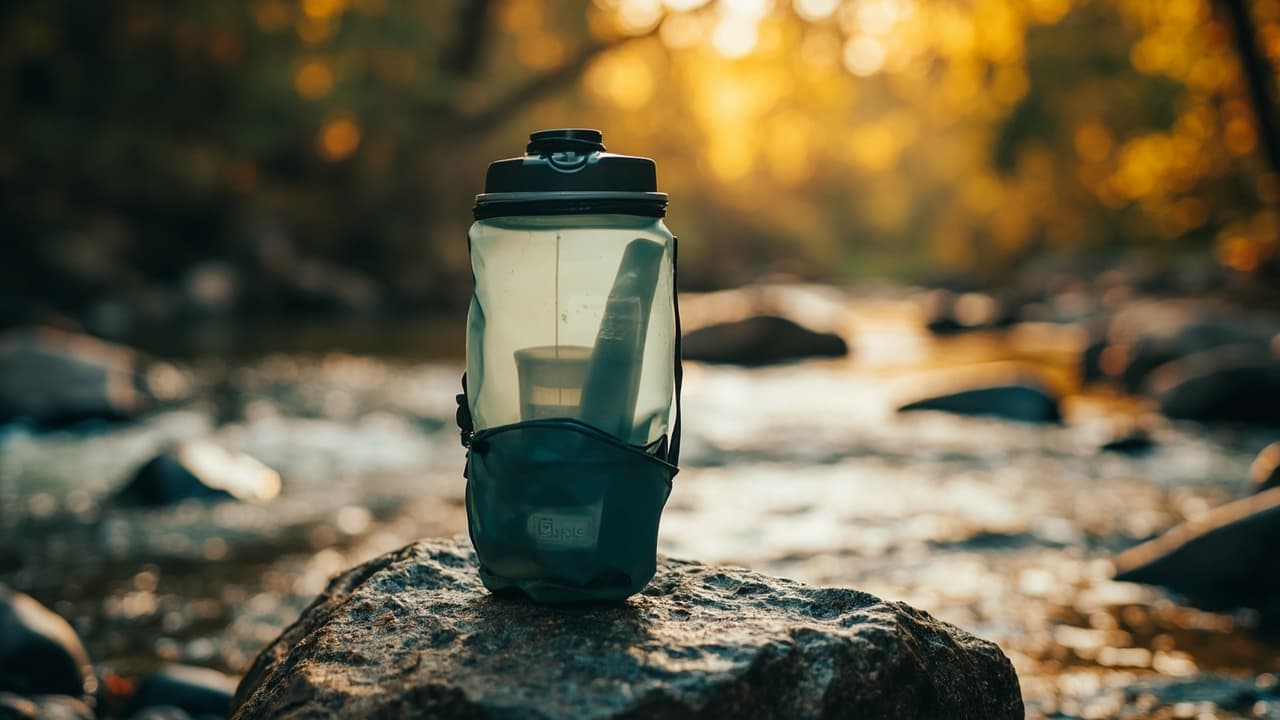
Clean water is non-negotiable. These filtration options under $40 make safe drinking water accessible anywhere.
Affordable Water Filtration for Camping — Quick Comparison

LifeStraw Personal Water Filter for Hiking

Sawyer Squeeze Water Filtration System

Camco Tastepure RV Water Filter

Sawyer Products SP128 Mini Water Filtration System
Sawyer Products SP105 MINI Water Filtration System

Membrane Solutions Personal Water Filter Straw S1
Prices and ratings last checked Oct 9, 2026 and can change at any time. Confirm the current price on Amazon before buying.
Clean drinking water is the one supply you cannot improvise at a campsite. A filter turns questionable creek water, lake scoops, and sketchy campground spigots into something safe enough to refill a bottle, hydrate pasta, and brush teeth without a worry. The good news is that the category has matured: budget water filters now use the same hollow-fiber membrane technology as the expensive ones, and several squeeze-style systems thread directly onto standard disposable bottles. You do not need to spend a lot to be safe.
This guide walks through what to look for in a budget filter, then highlights six affordable options that cover the main use cases: day-hike carry, group camping, RV hookups, and emergency kits.
How to Choose an Affordable Water Filter
Start by matching the filter to how you actually camp. A solo hiker filtering from a mountain stream has different needs than a family at a developed campground topping off a jug from a shared spigot.
Filtration type matters more than brand. Hollow-fiber membranes block bacteria and parasites down to about 0.1 microns, which covers the two biggest backcountry threats: E. coli and Giardia. Activated carbon layers, often labeled KDF or GAC, help with taste and odor and reduce chlorine and some heavy metals. If your water source is questionable urban water (campground hose, RV fill-up), a carbon stage is worth it. If you are filtering clear backcountry water, a hollow-fiber membrane is enough.
Flow rate is the next decision. Squeeze-style filters and straws trade speed for portability. A filter that produces a slow trickle is fine for a single hiker with patience; it is miserable for filling three bottles at the dinner table. Inline and gravity-style systems push more water per minute but take up pack space.
Weight and form factor drive daypack decisions. Straws and small personal filters weigh a few ounces and clip onto a pack. Larger systems with reservoirs are better for base camp. Look at what the filter comes with: a pouch, a syringe for backflushing, a bottle adapter, and a hydration-pack hose adapter all add value without raising the price much.
Finally, maintenance determines long-term cost. Hollow-fiber membranes need occasional backflushing to remove the biofilm that slows them down. Filters with included cleaning syringes or easy-to-open housings last longer in the field. Storage matters too: never let a hollow-fiber filter freeze with water inside or the membrane cracks and the filter is ruined.
The Picks
LifeStraw Personal Water Filter
The LifeStraw Personal is the filter most people picture when they think "straw." It is a tube-shaped personal filter designed for emergency use, travel, and lightweight hiking. You drink directly through it like a straw from any freshwater source, and the hollow-fiber membrane inside is rated to remove bacteria and parasites down to 0.2 microns.
For ultralight day hikes and emergency kits, this is hard to beat. It weighs just a couple of ounces, has no moving parts, and stores in a small tube. The capacity is generous enough to handle a long weekend for one person. The trade-off is flow: you sip slowly and there is no reservoir, so filling bottles or cooking pots means standing over the stream for a while. There is also no activated carbon, so swampy or stagnant water will still taste off.
Best use: a bug-out bag, an emergency kit in the car, or a minimalist daypack where every ounce matters.
Check the LifeStraw Personal Water Filter on Amazon.
Camco Tastepure RV Water Filter
Campground water is a different problem than backcountry water. RV hookups and campground spigots can smell like chlorine, pick up rust from old pipes, or carry sediment from a shared well. The Camco Tastepure is an inline filter designed to thread directly onto a standard garden hose or RV water inlet.
Inside the housing, the filter combines granulated activated carbon (GAC) and KDF media. The carbon tackles chlorine taste and odor, and KDF reduces some heavy metals and helps control bacterial growth inside the filter itself. The flexible hose protector on the end keeps the connection from kinking. For RVers and anyone filling a large camp jug at a spigot, this kind of carbon-stage filtering makes a real difference in taste and odor.
It is not a backcountry filter; it does not have a hollow-fiber membrane for bacteria. Its job is polishing already-treated water and catching sediment, not purifying raw water.
Best use: any RV trip, or any car-camping setup where you refill jugs from campground spigots and want better-tasting water for cooking and drinking.
Check the Camco Tastepure RV Water Filter on Amazon.
Sawyer Products SP128 Mini Water Filtration System
The Sawyer SP128 Mini is the smaller sibling of the Squeeze, designed to thread directly onto a standard 28mm disposable water bottle. There is no pouch in the kit, just the filter itself, which keeps weight and cost down.
For day hikes, trail runs, and fast-and-light camping, the Mini is a clever setup: buy a bottle of water at the trailhead, drink it, then screw the Mini onto the empty bottle and use it as your scoop and squeeze bottle at the next stream. Flow is slightly slower than the full-size Squeeze but still strong enough to refill a 1-liter bottle in a couple of minutes. Backflushing is the same process: use the included syringe to push clean water backward through the membrane.
Best use: hikers who already carry a water bottle and want to drop a filter directly into a pocket instead of packing a pouch system.
Check the Sawyer Products SP128 Mini Water Filtration System on Amazon.
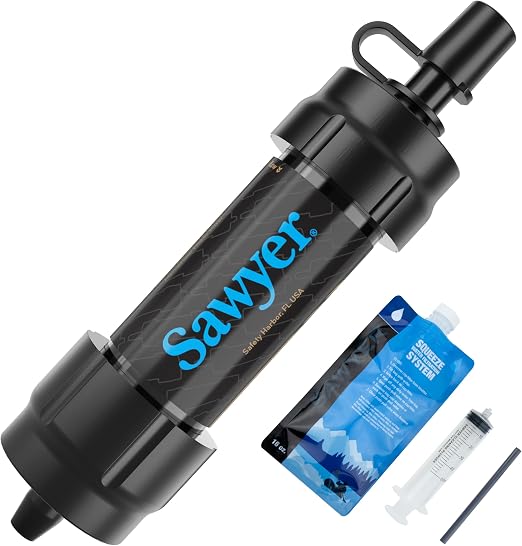
Sawyer Products SP105 MINI Water Filtration System
The Sawyer SP105 is the same Mini filter as the SP128 in a black housing. Functionally, it is identical: 0.1-micron hollow-fiber membrane, the same threading for 28mm bottles, the same backflushing routine. The black color is purely cosmetic, but a few practical reasons exist to choose it. Black housings hide algae and biofilm staining during long trips, and the darker shell is slightly easier to find if you drop the filter in the grass.
If you already own other black-cased gear or just want a second filter for a buddy's kit, the SP105 is a simple way to standardize.
Best use: same as the SP128, with a slightly stealthier look in the pack.
Check the Sawyer Products SP105 MINI Water Filtration System on Amazon.
Membrane Solutions Personal Water Filter Straw S1
The Membrane Solutions S1 is a straw-style personal filter in the LifeStraw category, but it carries independent NSF/ANSI 42, 372, and 401 certifications, which cover material safety and reduction of chlorine, lead, and mercury in addition to the usual bacteria and parasites. It also fits standard 28mm bottles like the Sawyer Mini, which makes it a flexible carry option.
Capacity is the standout spec here: the manufacturer rates it for 1,320 gallons of use, which is far more than typical straw filters. That makes it a strong emergency-preparedness choice where the filter may sit in a kit for years before being pulled out. Like other straw filters, you drink directly through it or screw it onto a bottle to push water through into a container.
Best use: emergency kits, vehicle bug-out bags, and anyone who wants a certified straw filter that also doubles as a bottle-thread filter.
Check the Membrane Solutions Personal Water Filter Straw on Amazon.
Verdict
If you camp in the backcountry, the Sawyer Squeeze is the right starting point. It balances weight, flow, price, and long-term durability better than anything else in the budget tier, and the cleaning syringe extends its life across many trips. Pair it with a personal straw filter (LifeStraw Personal or Membrane Solutions S1) for an emergency kit in the car.
If you camp at developed sites with an RV or you refill jugs from campground spigots, add the Camco Tastepure inline filter. Hollow-fiber filters do not address taste and chlorine; carbon-stage filters do. The two systems complement each other and together cost less than most premium all-in-one units.
The Sawyer Mini (either SP128 or SP105) is the trimmer alternative when you want to skip the pouch and use a bottle you already carry.
Pick based on water source first, then weight, then extras. A cheap filter used correctly is safer than an expensive filter left in the closet.
Related guides: How to Find Free Campsites · Best Budget Trekking Poles: Cheap Hiking Poles Under $40 · Affordable Headlamps for Camping - Top Picks
Keep reading