The best budget trekking poles and cheap hiking poles under $40: which pairs hold up, how to size them, and the tradeoffs you accept at this price.
Best Budget Trekking Poles: Cheap Hiking Poles Under $40 — Quick Comparison
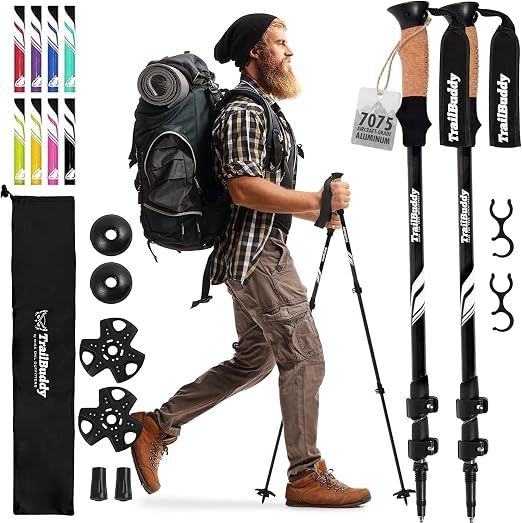
TrailBuddy Trekking Poles

KINGGEAR Trekking Poles 7075 Aluminum Lightweight Hiking

Cascade Mountain Tech Lightweight Aircraft-Grade Aluminum

Telescopic Trekking Poles for Hiking

Hiking Poles

Amazon Basics Trekking Poles
Prices and ratings last checked Oct 6, 2026 and can change at any time. Confirm the current price on Amazon before buying.
When the leaves start to turn and the trails get covered in crunchy gold, a lot of hikers dig their trekking poles out of the closet or finally admit it's time to buy a pair. Trekking poles earn their keep in fall: they stabilize you on slick leaf litter, take stress off your knees on descents, and help you push through soft, wet sections without losing your rhythm. The question most folks ask isn't whether to use poles but whether the budget models under $40 are actually worth owning or just disposable weight.
The honest answer: yes, several of them are genuinely worth it. They are not going to match a $180 pair of carbon-fiber race poles, and they shouldn't. But for the day hiker, the weekend backpacker, the fall trail walker, and the senior looking for a little extra balance on uneven ground, a budget pair can deliver most of the benefits at a fraction of the cost. The trick is knowing what tradeoffs to expect, and that's exactly what this guide is built around.
The short answer: budget trekking poles are worth it for most hikers. The TrailBuddy pair is the best all-round pick, the Cascade Mountain Tech pair adds an extended grip for steep sidehills, and the Amazon Basics pair is the low-commitment way to try poles for the first time. Whatever you buy, look for aluminum shafts, locks you can work with gloves on, and a pair rather than a single pole.
How to Choose Budget Trekking Poles
Before you look at specific products, run through a few quick decisions. These are the things that actually separate a useful pole from one that ends up in a closet.
Material: Aluminum vs. Carbon
At this price tier, almost everything is aluminum, and that's fine. Aircraft-grade 7075 aluminum is the workhorse of the category. It is heavier than carbon, but it bends rather than snaps on impact, which means a hard fall usually bends the pole instead of breaking it and sending you home with a sharp edge in your hand. Carbon poles at the budget level exist but tend to be weaker, so aluminum is the safer buy for new hikers.
Lock Type: Flip Locks vs. Twist Locks
Flip locks are a small lever on the outside of the pole. Twist locks are an internal expanding mechanism you tighten by rotating the sections. Flip locks are faster to adjust, work with gloves on, and are easier to fix in the field if they slip. Twist locks are slightly lighter and have fewer parts to snag. For most beginners, flip locks are the friendlier choice.
Grip: Cork, Foam, or Rubber
Cork grips mold to your hand over time, manage sweat well, and feel cooler in warm weather. EVA foam is lighter, cheaper, and softer on cold mornings. Hard rubber is common on the cheapest poles and can feel punishing on long walks. An extended grip section below the main grip is also useful: it lets you choke down on the pole when traversing steep sidehills without having to change the length.
Weight and Packed Size
If you are carrying them in a pack for long stretches, packed length matters. Most budget pairs collapse to around 24 to 28 inches, which fits comfortably in or on a backpack. Look for the listed weight per pair, not per pole, since most are sold as pairs.
Accessories Included
A good budget pole usually includes a few tips and baskets. Standard rubber tips for pavement, carbide tips for trail, mud baskets, and snow baskets all matter. Having them in the box saves a separate purchase.
Adjustability Range
Check the minimum and maximum length. If you are shorter than 5'4" or taller than 6', this matters more than it sounds. A pole set too short or too tall can actually hurt your shoulders.

The Best Budget Trekking Poles
1. TrailBuddy Trekking Poles — Everyday Aluminum Value
The TrailBuddy pair is one of the most common entry points into trekking poles for a reason. They use 7075 aluminum shafts, collapse down small enough for a backpack, and adjust through a fairly wide range that covers most adult heights. The grips are EVA foam, which keeps them comfortable on chilly fall mornings, and the included tip kit covers pavement, dirt, and mud.
For day hikers and casual backpackers who want a no-fuss pole that does the job on graded trails, leaf-covered paths, and easy mountain routes, this is a sensible starting point. They are a touch heavier than premium options, but that extra mass also means they take abuse well.
Check the TrailBuddy Trekking Poles on Amazon
2. Cork-Grip 7075 Aluminum Trekking Poles with Flip Locks
If grip comfort is your top priority, this pair stands out in the budget field. The natural cork handle molds to your hand and stays comfortable on long days, while the EVA foam section below the grip extends the usable hold for steep terrain. Combined with a flip-lock system that you can adjust with gloves on, the design feels closer to midrange poles than the price would suggest.
This is a strong pick for hikers with sweaty hands, joint issues in the wrists, or anyone doing longer miles where grip fatigue matters. The included accessories cover the standard terrain situations.
Check the cork-grip 7075 trekking poles on Amazon
3. Cascade Mountain Tech Aluminum Trekking Poles with Extended Grip
Cascade Mountain Tech has built a reputation in the budget category, and this aluminum pair with the extended down grip is a workhorse option. The extended grip is the highlight: it gives you a usable hold lower on the pole for sidehill traverses and steep changes in grade without fiddling with the locks. The aircraft-grade aluminum shaft is durable, and the tip kit covers most conditions a fall hiker will run into.
These poles lean toward hikers who want a stable, planted feel rather than the lightest possible swing. They are well suited to heavier users, uneven terrain, and anyone who wants extra confidence on descents.
Check the Cascade Mountain Tech poles on Amazon
4. Telescopic Anti-Shock Trekking Poles for Hiking
For hikers who want a softer feel on their joints, an anti-shock system is worth considering. These telescoping poles have an internal spring mechanism that compresses slightly on impact, which takes the edge off hard heel strikes and rocky terrain. The adjustability range is broad, covering both shorter hikers and tall users, and the collapsible design makes them easy to pack.
The trade-off is weight: anti-shock parts add a bit of mass, and there is more internal mechanism that could potentially wear. For hikers with knee or elbow sensitivity, however, the extra forgiveness is a real benefit, especially on long downhill sections.
Check the anti-shock telescoping poles on Amazon
5. Lightweight Aluminum Adjustable Trekking Poles, 2-Pack
This option is aimed at value-focused buyers who want a straightforward 2-pack that covers most hiking situations. The telescoping aluminum shafts adjust smoothly, the grips are simple EVA foam, and the accessory kit covers the basics. Nothing fancy, but nothing missing either, which is often exactly what a first pair of poles needs to be.
This is a sensible pick for casual walkers, family trips, or anyone who wants a backup pair to keep in the car. They are also a reasonable choice for seniors who want extra stability without paying for premium branding.
Check the lightweight adjustable trekking poles on Amazon
6. Amazon Basics Trekking Poles with Quick Lock
The Amazon Basics pair is the definition of a value pick. Quick-lock levers make adjustments fast, the aluminum shaft is dependable, and the EVA grip is comfortable enough for most day hikes. The all-terrain accessory kit covers the common conditions you will actually use them in, and the 53-inch length listed suits a wide range of adult heights.
This is the pole to grab if you want to try trekking poles without committing much money. It will not feel as refined as the others on this list, but it covers the core functionality and is a perfectly reasonable place to start.
Check the Amazon Basics trekking poles on Amazon
How Budget Trekking Poles Compare
Most of the poles on this list share the same fundamental design. Aircraft-grade aluminum shafts, three-section telescoping construction, EVA or cork grips, and a flip or quick-lock adjustment. The differences show up in the details: grip material, whether the grip extends down the shaft, whether there is an anti-shock feature, and the quality of the accessories.
For most fall day hikes, those differences don't change the experience much. They become more meaningful as hike length, terrain difficulty, or physical sensitivity increases. A cork grip matters more on a 12-mile day than a 3-mile loop. Anti-shock matters more on rocky descents than on smooth rail trails. Extended grips matter more when the trail crosses sidehills. Match the pole to the trail you actually walk.
How to Size Trekking Poles
Getting the length right matters more than which budget pair you buy.
- On flat ground: stand upright with the pole tip on the ground next to your foot, and adjust until your elbow bends to roughly 90 degrees with your forearm level.
- Going uphill: shorten the poles a few inches so you can plant them without hiking your shoulders up.
- Going downhill: lengthen them a few inches so you can reach the ground ahead of you and take weight off your knees.
- Traversing a slope: shorten the uphill pole and lengthen the downhill one, or choke down on an extended grip instead.
Every pair on this list is adjustable, so these changes take a few seconds on the trail.
Common Tradeoffs at This Price
A few honest things to expect from any sub-$40 trekking pole:
- Lock slippage can happen, especially after a season of use. A quick tightening of the lever or a small shim often fixes it.
- The tips wear down faster than premium poles, so replacing carbide tips is a normal maintenance task.
- Weight per pair is usually in the 18 to 22 ounce range. Not backpacking-ultralight, but manageable.
- The included baskets and tips cover most situations but rarely include specialized snow baskets, which can be added separately.
None of these are deal-breakers. They are just the price of admission for a budget pole.
Questions People Ask
Aluminum or carbon trekking poles at this price?
Stick with aluminum. Aircraft-grade 7075 aluminum, which is what almost every pole on this list uses, bends rather than snaps on a hard impact — a fall usually leaves you with a bent pole instead of a broken one with a sharp edge. Carbon poles exist at the budget level, but they tend to be weaker there, so aluminum is the safer buy for new hikers.
Should you hike with one trekking pole or two?
Two poles evenly distribute support and are the standard recommendation for backpacking, since they let you push off with both arms on climbs and brace with both on descents. A single pole is lighter and cheaper, and can be enough for casual walks or a little extra balance on flat trails, but it won't help your knees on a steep downhill the way a pair does.
Cork or foam grips — which is better for hiking?
Cork molds to your hand over time, manages sweat well, and feels cooler on warm days. EVA foam is lighter, cheaper, and softer on cold mornings. Neither is objectively better — pick cork if you hike long miles and want a grip that breaks in, or foam if you mostly want a comfortable, no-fuss handle.
Are cheap trekking poles worth it?
Yes, for most day hikers and weekend backpackers. A budget aluminum pair delivers the main benefits (balance on uneven ground and less strain on your knees on descents) at a fraction of the price of premium poles. What you give up is weight, lock refinement, and tip life, not the core function.
Are trekking poles and hiking poles the same thing?
Yes. "Trekking poles" and "hiking poles" are two names for the same gear: adjustable poles, usually sold in pairs, used for balance and support on the trail. Every pair on this list works as either. A hiking staff or walking stick is different: a single pole used mostly for balance.
Verdict: Worth It or Waste?
For most fall hikers, a budget trekking pole under $40 is absolutely worth it. The core benefits — knee protection on descents, balance on uneven ground, better rhythm on long days — are delivered just fine by aluminum budget poles. The poles that stand out in this group are the TrailBuddy pair for general value, the cork-grip pair for comfort on long hikes, the Cascade Mountain Tech pair for stability and an extended grip, and the anti-shock pair for anyone with joint sensitivity.
Save your money for rain gear or a better pack if you're choosing between upgrades. A solid budget pair of trekking poles is one of the best cost-to-benefit buys in the entire hiking gear world.
Related guides: Best Hiking Boots for Camping Under $100 and How to Pack Light for Camping.
Keep reading