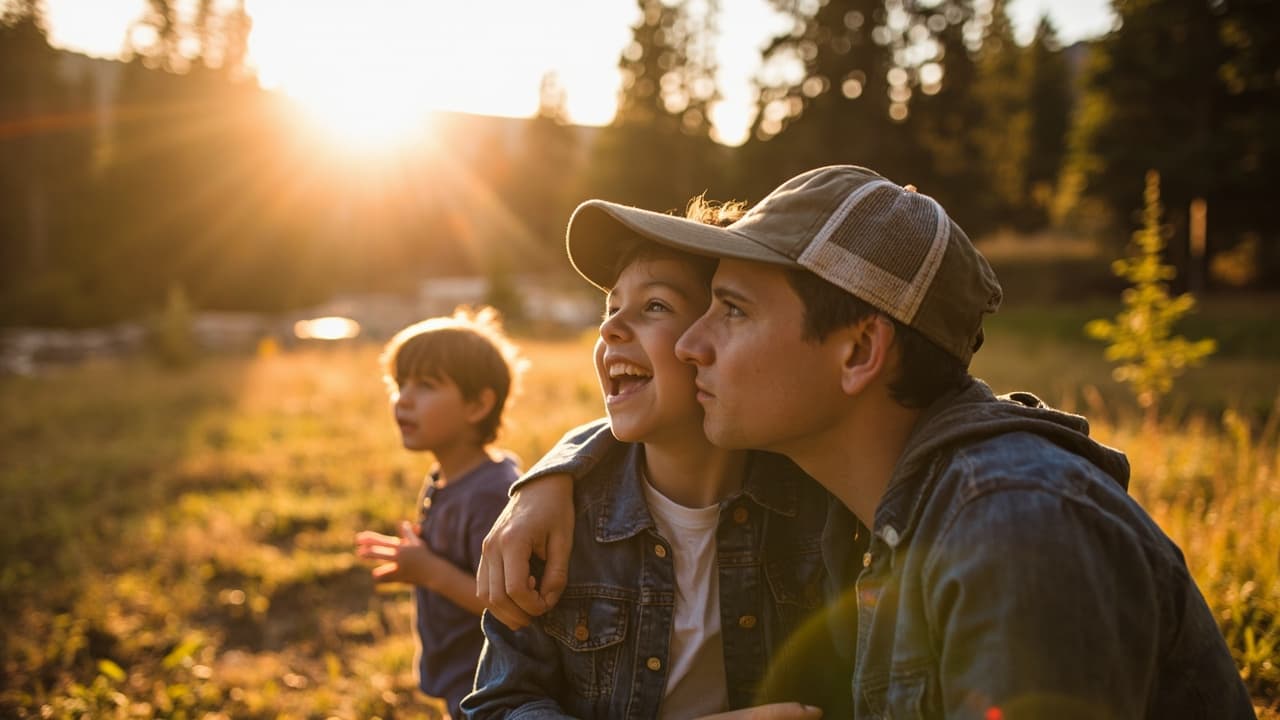
Learn how to plan a first family camping trip that hooks kids from the start, with tips on timing, site selection, and keeping young campers engaged and happy.
Camping With Kids — Making the First Trip One They Want to Repeat — Quick Comparison

The Ultimate Camping Would You Rather?: 350+ Silly Questions

Wise Owl Outfitters Kids Hammock

Hasbro Gaming Yahtzee Dice Game
Llama Llama Loves Camping

Rock Painting Kit- Glow in The Dark Rock Kit

WHAT DO YOU MEME? Kollide
Prices and ratings last checked Oct 9, 2026 and can change at any time. Confirm the current price on Amazon before buying.
A first family camping trip lives or dies on what happens in the first two hours after you set up the tent. If the kids are bored, cold, hungry, or scared of the dark, you will hear about it on the drive home and again at bedtime for the next six months. If they find a frog, learn a campfire game, and fall asleep to actual stars, you have bought yourself a hobby. This guide is built around the second outcome, with practical family camping tips for parents who have never taken kids out, or who tried once, got eaten alive by a meltdown, and swore off the whole thing.
How to Plan a First Trip That Sticks
Start shorter than you think. One night is plenty, two is a gift, and three can feel like a sentence when somebody has to use the bathroom at 2 a.m. Pick a drive time under two hours, a site with a flat tent pad, a real restroom nearby, and a water source you trust. Drive-in state park campgrounds with reservable sites are the lowest-risk option for a debut.
Pick the right window. Late spring through early fall is forgiving for beginners. Check the overnight low before you book — kids lose heat faster than adults, so a 55 F night is friendlier than a 45 F night for a first trip. Avoid holiday weekends if you can. Crowded sites mean late-arriving generators and loud groups right when your kid is trying to fall asleep.
Lower the bar on distance and elevation. A flat, walk-in campground with a paved road to the parking lot beats a backcountry site with a creek crossing every time. Save the adventure for trip number three when the kids know what "tent" means.
Pack for boredom, not distance. Children do not remember the view from the ridge. They remember the rock they painted, the bug they named, and whether somebody let them win at cards. Bring activities that don't need a battery and don't require the campfire to be lit.
What to Pack for Kids Specifically
- A headlamp or small flashlight for each child, with fresh batteries. Letting kids own their own light reduces "I'm scared" calls by about half.
- A change of clothes in a dry bag, plus an extra layer. Kids fall into creeks, spill drinks, and decide they hate the outfit they wore.
- Their own sleeping setup if possible. A kid-sized sleeping pad and a child-appropriate bag or quilt makes a real difference. Avoid cotton pajamas and cotton sweatshirts as warmth layers; cotton holds moisture and chills quickly once damp.
- A water bottle for each kid that they can identify. Hang a carabiner on it if you have to.
- A small daypack per child so they can carry their own stuff for short hikes. Loaded with a snack, a water bottle, and one toy, it becomes a status symbol.
Safety Rules That Are Not Negotiable
A few rules apply to every trip with children, no matter the weather or the site:
- Never run any combustion device — stove, heater, lantern, or grill — inside a tent, a screened shelter, or a closed vehicle. Carbon monoxide is colorless and deadly, and tents cannot vent it.
- Never sleep with a heater running. Set up bedding for the lowest expected temperature of the night instead.
- Treat or filter all drinking water from streams, lakes, and primitive camp faucets. Do not assume clear water is safe.
- Store all food, trash, and anything scented (toothpaste, sunscreen, snacks) in a vehicle or a hard-sided bear box — never inside the tent. This protects both the child and the wildlife.
- Do a tent walkthrough at dusk. Check for poison ivy, wasp nests under the rainfly, and ant trails before anyone is in pajamas.
- Have a buddy system for any walk to the bathroom, even at a developed campground.
Activities That Buy You an Hour at a Time
The trick to a kid-friendly camp is a short rotation of low-effort, high-engagement activities. Aim for one anchor activity per major block: arrival, late afternoon, after dinner, and post-breakfast.
For arrival, set up a "base camp" coloring rock. The Glow in the Dark Rock Kit keeps kids painting while you wrestle the tent, and the rocks light up later at bedtime, which is a built-in wind-down. Check current options through the Rock Painting Kit- Glow in The Dark Rock Kit listing.
For late afternoon, hammock time is a winner. A small, kid-sized hammock sets up between two trees with the included straps and gives kids their own spot to swing, read, or stare at the sky. Look over the Wise Owl Outfitters Kids Hammock product page for sizing and weight limits.
For after dinner, when the campfire is lit and screens are off, a question deck pulls the whole family into the same conversation. Silly prompts like "would you rather have a pet sloth or a pet penguin" are gold for ages six to twelve. See the full card list on the The Ultimate Camping Would You Rather? page.
For post-breakfast, board and dice games fill the gap between packing up and driving home without screens. Yahtzee is portable, scales from two players up, and is forgiving for mixed ages — review the Hasbro Gaming Yahtzee Dice Game listing for the travel cup details. If you want something faster and a little more chaotic, a magnetic tile game packs flat and sets up on a picnic table in under a minute; check what is included in the Check the Kollide by Relatable on Amazon box.
For bedtime, a picture book about camping does double duty as a familiar comfort and a way to talk about what the trip is actually like. Read it on a pad at home the week before so the kid has something to look forward to. Skim the Llama Llama Loves Camping page for the age range.
How to Choose Gear for a Family First Trip
Keep it boring on purpose. You are not outfitting a thru-hiker; you are outfitting a car camper with children who may or may not want to do this again. Rent or borrow what you can the first time. Anything you buy should pass three tests:
- It can be set up by one tired adult in low light. If a kid has to "help" or you can't figure out the poles, the gear has failed.
- It is rated for the worst weather you are likely to encounter. A tent rated for three-season use is fine for most family campgrounds; a fair-weather sunshade is not.
- The kids can carry or wear their own version of it. Kids who own their own gear treat it like a possession. Kids who share a parent's gear treat it like an inconvenience.
Buy once you know the hobby is real. A first trip with rented or borrowed gear is a low-cost audition for a much bigger investment.
Verdict
A great first family camping trip is 80 percent planning and 20 percent gear. Pick a forgiving site, keep the drive short, lower your expectations for distance, and pack for boredom with screen-free activities that span arrival to bedtime. Respect the hard safety rules — no combustion devices in tents, no sleeping with heaters, treated water only, food stored out of the tent — and treat cotton as a daytime layer rather than a warmth layer.
The picks above are built around keeping kids occupied in small, structured blocks without electronics. If you only buy two things for the first trip, get a question deck for the campfire and a kid-sized hammock for downtime. Those two cover the windows when most family trips fall apart.
Related guides: How to Start Camping With No Gear · Budget Camping Hacks That Actually Work
Keep reading