
Plan your autumn camping trip with timing strategies for peak foliage, regional color forecasts, and early booking tips to secure the best campsites.
Leaf-Peeping Camping — Timing the Colour and Booking Before It Peaks — Quick Comparison
Prices and ratings last checked Oct 2, 2026 and can change at any time. Confirm the current price on Amazon before buying.
There's a short window every autumn when the forest turns into a postcard, and the people who chase that window know that the difference between a stunning trip and a so-so trip usually comes down to two things: when you go, and how early you booked the site. Fall foliage camping rewards planners. The colour moves south in a slow wave from late September through early November, and the best campgrounds along that wave tend to fill up weeks — sometimes months — ahead of peak weekend colour. If you've ever pulled into a campground loop to find nothing but bare branches and a packed parking lot, you were probably a week late and a reservation too slow.
This guide is about timing and booking, with just a light touch on gear. The goal is to put you in front of the right trees on the right weekend, with a site already reserved.
How the Colour Moves (and Why That Matters)
Peak fall colour is not a national date — it's a rolling front that travels south and down in elevation as daylight shortens and nights cool. Generally speaking, northern New England, the Upper Midwest, the Rockies, and higher elevations in the West start turning first, often the last week of September into the first two weeks of October. Mid-Atlantic, Appalachians, and Pacific Northwest mid-elevations peak in mid to late October. The South, lower Midwest, and Texas hill country hold their colour into late October and early November.
A few practical rules of thumb:
- Elevation matters more than latitude. A ridge at 4,000 feet can peak two weeks before a valley ten miles away.
- A couple of warm, windy, or rainy days can strip a canopy in 48 hours. Plan as if your window is shorter than the calendar suggests.
- Midweek trips (Tuesday through Thursday) almost always have more site availability than weekends, and you'll often get the loop nearly to yourself for sunset photography.
Before you book anything, spend ten minutes checking a regional fall foliage forecast. State forestry services, regional tourism boards, and several weather services update foliage maps weekly through the season. These aren't perfect predictions, but they give you a moving target instead of a guess.
When to Book
For peak-colour weekends in popular destinations — Acadia, the White Mountains, the Smokies, the Adirondacks, Maroon Bells, Glacier, the Columbia River Gorge — book the moment you know your dates. That can mean four to six months ahead for holiday weekends like Columbus Day, and at least two months ahead for any regular October weekend in a marquee park.
A few booking tactics that actually help:
- Set calendar reminders for when reservation windows open. Many national and state systems release sites on a rolling six-month schedule.
- Have a shortlist of three or four campgrounds, ranked by preference, with backup dates one weekend earlier or later than your target. Flexibility is the single biggest advantage in fall.
- Look at less-photographed neighbors. If a park's main campground is sold out, check adjacent state forests, national forest campgrounds, or private campgrounds within a 30-minute drive. The colour rarely respects park boundaries.
- For last-minute trips, watch for cancellations. People rebook when weather turns bad, freeing up the best sites in the final 48 hours.
If you're flexible on region instead of date, chase the colour south through the season. Book late September in the Adirondacks, mid-October in the Smokies, and late October into early November in the southern Appalachians or Ozarks. That's a whole season of leaf peeping camping with a fraction of the competition for any single weekend.
How to Choose the Right Campground for Colour
Not every campground is a foliage campground. When you're comparing options, look for these features:
- Elevation and exposure. Sites on ridge tops or east-facing slopes catch the earliest and most dramatic colour.
- Water nearby. Rivers, beaver ponds, and lake edges double the colour show by reflecting the canopy, and they usually mean calmer morning wind.
- Mixed hardwood stands. Maple, birch, beech, oak, and hickory together produce a layered palette — reds, oranges, yellows, and rust — rather than a single-color wash.
- Open understory. If you can see through the trees to a view, you've found a leaf-peeping campground. Dense, closed-canopy pines are green year-round and won't deliver the show.
For a quieter experience, look beyond the named parks. National forest land, state wildlife management areas, and county parks often have free or low-cost sites tucked into spectacular stands of hardwood — especially across the Appalachians and the Upper Midwest. The trade-off is fewer amenities and sometimes no reservations, which means arriving midweek.
Light Gear for Fall Camping
This is a planning guide, not a gear review, so keep this section short. The biggest shift from summer to autumn camping is overnight temperature and the chance of rain. Nights can drop 20 to 30 degrees from afternoon highs, even in the South. Bring a sleeping bag rated roughly 10 degrees colder than the forecast low — condensation, a thin pad, and a still night all make it feel colder than the thermometer suggests. A simple tarp or rainfly extension gives you a covered cooking area during drizzle, which is far more common in October than July.
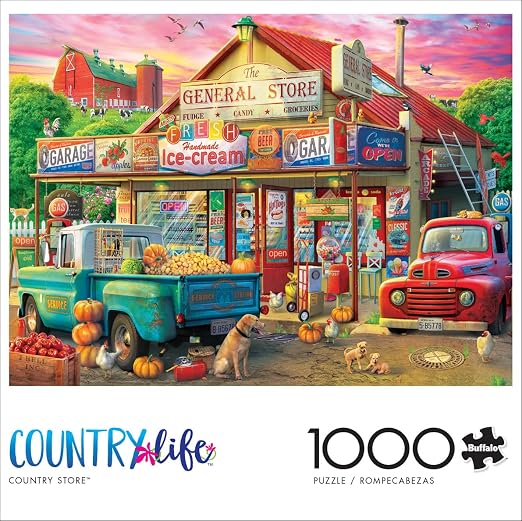
One small thing that pairs nicely with a leaf-peeping trip: an evening puzzle at the picnic table. After the sun drops and the temperature follows, a 1,000-piece jigsaw is a low-light, lantern-friendly activity that doesn't need a screen. The Buffalo Games - Country Store - 1000 Piece Jigsaw Puzzle for Adults is a quiet, made-in-USA option made from recycled board with a finished size that fits a standard camp table and a poster to help on the trickier canopy sections.
A Sample Two-Week Rolling Itinerary
If you're chasing the colour across regions, here's a simple framework:
- Week 1 (late Sept to early Oct): Northern New England, upper Great Lakes, or high Rockies. Book by July.
- Week 2 (mid-Oct): Mid-Atlantic ridges, central Appalachians, Pacific Northwest mid-elevations. Book by August.
- Week 3 (late Oct to early Nov): Southern Appalachians, Ozarks, Texas hill country. Book by September.
Driving between these regions means you follow the wave, watch the same trees turn at progressively lower latitudes, and avoid the gamble of betting everything on a single forecast.
Common Mistakes to Avoid
- Booking a "peak foliage" date that's actually a week past peak for your specific zone. Cross-check the foliage map, not just the marketing copy.
- Choosing a campground for its name rather than its tree composition. A famous lake with all evergreens around it is green in October.
- Underestimating how short the daylight is. Sunset comes fast after the equinox. Plan a pre-dinner loop for your best views and keep the camp setup simple.
- Skipping a backup plan. If the colour has passed or the weather turns, have a secondary site or alternate region within driving range.
Verdict
The best fall foliage camping trips are built backwards. Start from the trees, not the campground. Pick a region where the colour will peak on the dates you can travel, then book a site in a mixed-hardwood, water-adjacent loop as soon as reservations open. Keep a backup weekend one week earlier or later. Bring a slightly warmer sleeping bag than you think you need. And leave one evening unscheduled for a slow, lantern-lit table activity like a puzzle while the maples rattle outside.
Do that, and you'll be the person with the quiet site and the full canopy, instead of the one circling the loop at dusk looking for a place that isn't there.
Related guides: Fall Camping Gear — What Actually Changes When the Nights Get Cold · How to Find Free Campsites · Best Time of Year to Camp for Free
Keep reading