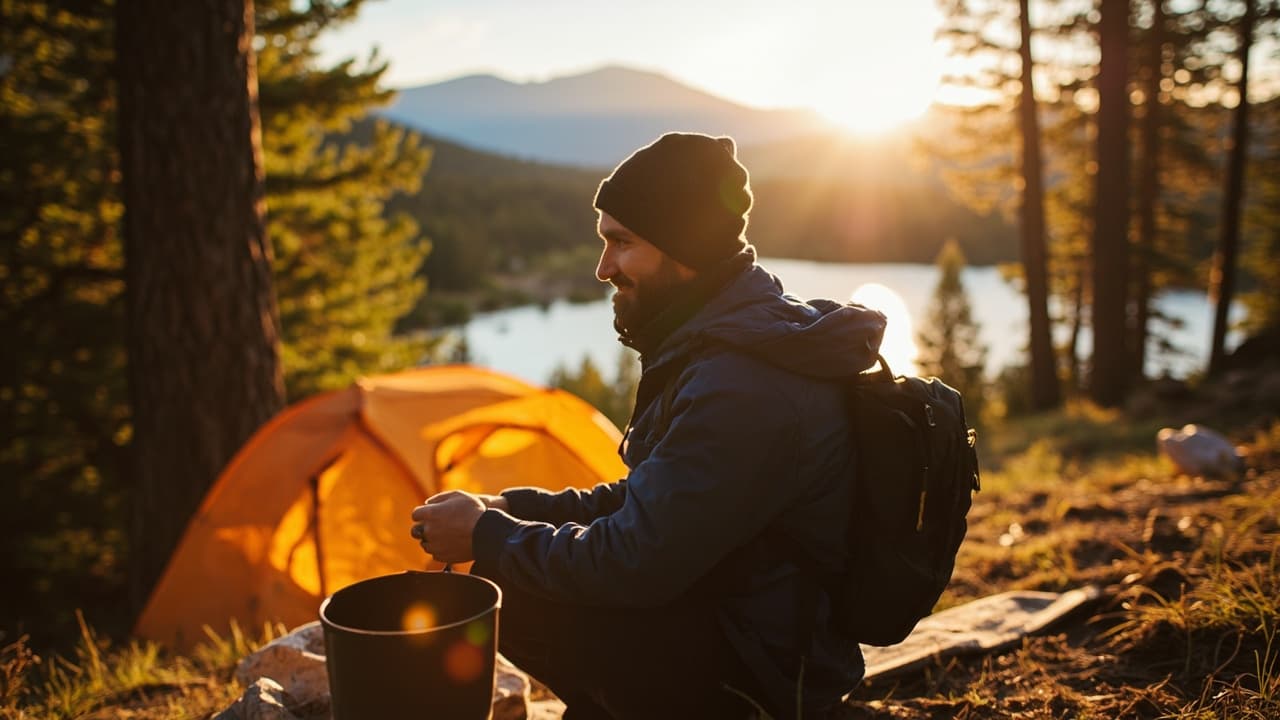
Master the four-layer camping system to stay warm all night. Learn why cotton kills, which fabrics actually insulate when wet, and the habits that drain heat.
How to Stay Warm Camping — The Layers and the Mistakes — Quick Comparison

Momcozy Universal Stroller Footmuff

VENTURE 4TH Backpacking Sleeping Bag for Camping

Teton Celsius Regular

HiZYNICE Sleeping Bags for Adults XXL Cold Weather Green 0F

MalloMe Sleeping Bags for Adults Cold Weather & Warm

3-4 Season Sleeping Bag for Adults & Kids
Prices and ratings last checked Oct 4, 2026 and can change at any time. Confirm the current price on Amazon before buying.
Cold nights end more camping trips than bugs, rain, and bad coffee combined. Most people who say they "can't sleep in a tent" aren't dealing with bad gear so much as a bad system: the wrong layers against the skin, the wrong fill under the body, and a few small habits that quietly drain heat all night. The good news is that staying warm while camping is mostly about layering, not about buying the heaviest bag on the shelf. Below is the framework I wish I'd had on my first dozen cold trips, followed by the gear that fits each layer.
How to Choose: The Layer System in Plain English
Warmth is not a single product. It's a stack of four decisions, and skipping any one of them shows up as a cold night.
Layer 1 — Base layer against the skin. This is the layer that touches you for eight hours. Wool and synthetic fabrics are the only safe answer here because they keep insulating when damp and dry faster than cotton. Cotton absorbs sweat, holds it, and pulls heat out of you — this is the well-known "cotton kills" rule, and it's not a slogan, it's a physics problem. So when you're packing long underwear, socks, and a sleep top, the only acceptable answer is merino wool or a synthetic like polyester or polypropylene. No cotton against the skin.
Layer 2 — Sleepwear. A loose-fitting mid layer over the base layer traps air. Fleece is the budget classic; a light down or synthetic puffy works too. The key word is loose: tight clothing compresses the loft of the insulation, which collapses the warm air pockets. If you can feel the fabric squeezing you when you lie down, you've picked the wrong size.
Layer 3 — The sleeping bag. This is where most of the warm air lives, so the bag matters more than anything else. Look at the temperature rating, but read it carefully: many bags list a "limit" rating using older standards, which assumes a warm sleeper, a thin pad, and ideal conditions. For typical campers, treat the rating as optimistic and aim 10°F lower than the forecast you expect. Also pay attention to shape — mummy bags are warmer per ounce, rectangular bags feel roomier but let drafts pool around your feet.
Layer 4 — The pad under you. This is the silent killer. A sleeping bag only insulates the air around you, not the ground. Your body compresses the bag's fill against the pad, and if the pad is thin, the ground will pull heat out of you all night — no bag in the world fixes that. Closed-cell foam and inflatable pads both work; what matters is the R-value. A summer pad rated around R-1 is fine for July nights; shoulder-season cold needs R-3 or higher, and true winter camping wants R-4 and up.
Once you have those four layers straight, the rest of staying warm is just hygiene: eat a snack before bed (digestion generates heat), keep a hat on, tuck a dry base layer into the bag in case you wake up cold at 3 a.m., and never let moisture build up inside the tent by venting it whenever weather allows.
The Most Common Cold-Weather Camping Mistakes
A quick list of habits worth dropping before your next trip.
- Wearing cotton into the tent. T-shirts, jeans, cotton socks, cotton hoodies — all of them get clammy and stay clammy. Replace with wool or synthetic for anything that lives close to your skin.
- Undervaluing the ground pad. A $400 bag on a thin summer pad is a $400 pad with a sleeping bag on top. Match the pad to the season.
- Tightening the bag's hood all the way around your face. You want a narrow opening that traps warm air around your nose and mouth, not a sealed tube. Your breath needs somewhere to go besides back into the bag as condensation.
- Sleeping in damp clothes. If your day's clothes are sweaty, change into a dedicated dry sleep base layer. Packing two pairs of socks is not overkill; it's the move.
- Going to bed cold. Do a few jumping jacks or a short walk before you climb in. Climbing into a bag cold is the hardest way to get warm because the bag has to warm both you and the air inside it.
- Skipping calories. A small fatty snack an hour before bed — cheese, nuts, chocolate — gives your body fuel to burn through the cold stretch in the early morning when temps bottom out.
Picks That Fit Each Layer
The product list below walks through the stack from inside the tent to the outside air, so each pick has a clear job.
1. Momcozy Universal Stroller Footmuff — Plush Weatherproof Bunting Bag
A footmuff sounds like a baby-product oddity on a camping list, but hear the use case: it's a weatherproof, plush-lined shell designed to wrap around a small occupant and block wind. Pull one onto the foot of your sleeping bag on the coldest nights and it acts as a wind-and-draft shell over your feet and calves — exactly the zone that gets cold first. The extendable cover grows as your bag compresses, so it doesn't fight the loft, and the buckle straps keep it from sliding off if you roll in your sleep. It's also handy for sitting around a fire pit or for a toddler in a carrier. Not a substitute for a real bag in deep cold, but a clever add-on that costs almost nothing.
Check the Momcozy Universal Stroller Footmuff on Amazon
2. VENTURE 4TH Backpacking Sleeping Bag
This is the bag to look at if you want one bag that flexes across shoulder-season trips. It's offered in single, XXL, and double widths, which matters because the warmth of a bag drops fast when it's too tight against your body — the fill can't loft if there's no air gap. The water-resistant, breathable polyester shell handles tent condensation and the occasional dew-soaked grass without soaking through to the fill. It also compresses into an included stuff sack, so it packs small enough for short backpack trips rather than only car camping. A sensible mid-range pick if you want a single bag that can move from early fall through late spring in most of the country.
Check the VENTURE 4TH Backpacking Sleeping Bag on Amazon
3. Teton Celsius Regular Sleeping Bag
Teton's Celsius line is one of the more budget-friendly ways to get a true three-season or winter bag. It's offered at 25F, 20F, and 0F ratings, so you can pick the one that matches your forecast rather than over- or under-buying. For cold-weather camping tips that focus on real conditions, that flexibility is the whole point. The included stuff sack doubles as a storage sack, which is more important than it sounds: storing a sleeping bag compressed long-term wrecks the loft, and having one bag that pulls double duty means you don't have to remember a separate cotton storage sack at home. Pair one of these with an R-3 or higher pad and you've covered the under-and-around-you system.
Check the Teton Celsius Regular Sleeping Bag on Amazon
4. HiZYNICE Sleeping Bags for Adults XXL Cold Weather
For campers who run cold, toss and turn, or just don't want a mummy hugging their face all night, a wide rectangular bag is the comfort play. This one is 90 by 39 inches, which is genuinely roomy, and the cotton flannel lining is one of the few places cotton belongs in a sleep system: against the inside of the bag, not against your skin. The flannel feels warm to the touch the moment you slide in, which shortens that miserable "waiting for the bag to warm up" period. It includes a compression sack for transport. Best for car camping and cabin-style basecamps where weight doesn't matter and you want maximum comfort.
Check the HiZYNICE Sleeping Bags for Adults XXL Cold Weather on Amazon
5. MalloMe Sleeping Bags for Adults Cold Weather & Warm
A versatile family-style pick that comes in single and double sizes, so it covers both solo trips and the "couple sharing a bag to save weight" use case. The shell is built to handle damp ground and cool nights without making you feel clammy, and the bag packs down small enough for backpacking despite the family-friendly sizing. If you've got kids, the kid sizing makes this an easy hand-me-down system — buy one adult bag, one kid bag, and you're set for most fair-weather trips. For the price tier, it's a solid intro to cold-weather camping without locking you into one temperature rating.
Check the MalloMe Sleeping Bags for Adults Cold Weather & Warm on Amazon
6. 3-4 Season Sleeping Bag with Waterproof Compression Sack
A 3-4 season bag is the right tool for the awkward shoulder months when the forecast can swing 30 degrees between sunset and sunrise. This style typically uses a synthetic fill that keeps insulating when damp — important if you've ever packed a damp bag by accident or set up camp in drizzle. The waterproof compression sack is the underrated half of the package: it lets you lash the bag to the outside of a pack on wet days without soaking the loft. For campers in the Pacific Northwest, the Northeast, or anywhere with unpredictable shoulder seasons, this is the bag that lets you stop checking the 10-day forecast obsessively.
Check the 3-4 Season Sleeping Bag with Waterproof Compression Sack on Amazon
Verdict: What to Actually Buy First
If you're buying one thing to fix cold nights, it's not a sleeping bag — it's a better pad. A four-season pad under any of the bags above will outperform a four-season bag on a summer pad. Once your pad is right, pick a bag rated about 10°F below the coldest temperature you realistically camp in: the VENTURE 4TH for flexible backpack trips, the Teton Celsius if you camp in real winter, the 3-4 Season bag for unpredictable shoulder weather, and the HiZYNICE or MalloMe for roomy car-camping comfort. Layer wool or synthetics against your skin, keep cotton out of the sleep system, and remember that a small snack and a dry pair of socks do more for warmth than almost any gadget you can pack.
Related guides: Best Budget Sleeping Pads Under $50 · Fall Camping Gear Essentials · Best Budget Sleeping Bags for Cold Weather
Keep reading