
Cheap cold-weather sleeping bags that stay warm on frosty nights, what temperature ratings really mean, and low-cost ideas to make any sleeping bag warmer.
Best Budget Sleeping Bags for Cold Weather & Winter Camping — Quick Comparison

Coleman Brazos 20/30°F Adult Cool-Weather Sleeping Bag
Coleman Brazos Cold-Weather Sleeping Bag

HiZYNICE Sleeping Bags for Adults XXL Cold Weather Green 0F

Teton Celsius Regular
Teton Celsius Regular

VENTURE 4TH Backpacking Sleeping Bag for Camping
Prices and ratings last checked Oct 9, 2026 and can change at any time. Confirm the current price on Amazon before buying.
Cold nights ruin good trips. The wrong bag turns a peaceful October camp into a shivering, sleep-deprived mess, and the "fix" usually means buying a heavy, expensive mountaineering bag that most weekend campers don't need. The truth is that a budget sleeping bag rated to 20°F handles more real-world cold-weather camping than people think, as long as you match the bag to your conditions and dress it up with a decent pad underneath.
This guide walks through what actually matters in a budget cold-weather bag, then highlights six options that punch above their price. None of these are ultralight, expedition-grade, or built for Arctic nights, but each one is capable enough for shoulder-season camping, late-fall car camping, and most winter trips at lower elevations.
The short answer: the Teton Celsius 0°F is the best budget cold-weather sleeping bag for most campers. Tall or broad sleepers should look at the roomy HiZYNICE XXL, and car campers who want an easy first cold-weather bag can start with a Coleman Brazos. Whichever you choose, the pad under you matters as much as the bag, and if you're not ready to buy, the cheap ideas further down will make the bag you already own warmer.
How to Choose a Budget Cold-Weather Sleeping Bag
Before picking a bag, it helps to understand the few specs that actually matter when temperatures drop.
Temperature rating. Manufacturers list one or two numbers: a "comfort" rating (the temperature at which an average sleeper stays warm) and a "lower limit" rating (the temperature at which a curled-up sleeper survives, but probably isn't comfortable). For cold-weather use on a budget, look for a bag rated to 20°F or lower for shoulder-season and a true winter bag rated to 0°F for serious cold. The bags below span both ends of that range.
Insulation type. Down is lighter and warmer for its weight, but more expensive and less forgiving when it gets damp. Synthetic insulation is heavier, bulkier, and cheaper, but it keeps insulating when wet and dries faster around a campfire. Every bag on this list is synthetic, which keeps cost down and reliability up for casual campers.
Shape. Mummy bags taper at the feet and shoulders, which reduces empty air space and improves warmth. Rectangular "camp" bags are roomier and cheaper but less efficient in the cold. Hybrid or "wide mummy" shapes split the difference.
Weight and packed size. Important if you're backpacking, less important if you're car camping. A 6-pound mummy bag is annoying to carry for 8 miles but totally fine when it lives in the trunk.
Length and girth. Tall and broad sleepers should look at the dimensions, not just the price. A too-short bag leaves your shoulders and feet exposed, which is where cold gets in first.
Extras that matter. A draft collar around the neck, a full-length zipper with an insulated draft tube, a snag-free zipper design, and a hood you can cinch down are the small features that separate a barely-warm bag from a comfortable one.
Finally, remember that your sleeping pad matters as much as your bag. A cold-weather bag on a thin summer pad will still feel cold because the ground steals heat from underneath. Pair any of these with an insulated pad. Pads are rated by R-value rather than temperature; for nights around freezing, a pad around R4 or higher is a common target, and stacking a closed-cell foam pad under an inflatable one is a cheap way to get there.
The Best Budget Cold-Weather Sleeping Bags
Coleman Brazos 20/30°F Adult Cool-Weather Sleeping Bag
The Coleman Brazos is the classic "first cold-weather bag" for a reason. It's a rectangular bag rated for cool weather, with enough fill to handle frosty nights at a car camp or an early-season backpacking trip in the Appalachians. The shell is a brushed, soft-touch fabric that feels comfortable against a base layer, and the no-snag zipper design is a small but meaningful upgrade from older budget bags where the fabric constantly catches in the teeth.
At this rating, it's not a winter sleeping bag, but for late spring through mid-fall at most elevations, it covers the conditions most weekend campers run into. It rolls into a stuff sack for transport and is machine washable, which is the kind of feature that sounds minor until you've tried to clean a down bag by hand.
This is the right bag for a first-time cold-weather camper who wants a forgiving, easy-to-use option without spending much.
Coleman Brazos Cold-Weather Sleeping Bag
The Brazos cold-weather version shares the shell and no-snag zipper platform of the cool-weather sibling above and carries a similar 20°F/30°F listing, so treat it as an alternative version rather than a warmer step up. It's still a rectangular bag with synthetic fill, and like most budget bags it is most comfortable well above its lowest listed number, so plan on it for nights in the upper 30s and 40s.
It weighs more than a true mummy, which is fine for car camping, truck camping, and short walks from the parking lot. For a family trip in late October, a winter base-camp in the southern Appalachians, or a cool desert night in March, it does the job without costing much. The included stuff sack and machine-washable design keep it practical for repeat use.
Choose between the two Brazos bags on price and availability rather than warmth.
HiZYNICE Sleeping Bags for Adults XXL Cold Weather
Bigger campers often get squeezed out of budget bags. HiZYNICE makes an oversized cold-weather option that addresses exactly that problem, with a wide, tall rectangular cut rated down to 0°F. The generous dimensions mean broad shoulders and tall frames aren't crammed against cold fabric, and there's enough internal volume to wear a base layer and even stash a water bottle inside without compressing the insulation.
The 0°F rating is on the optimistic side for a budget synthetic bag, but it performs well into the 20s and low 30s with the right pad and a base layer. The right-side zipper, draft tube, and hood help trap warmth where most budget rectangular bags leak it. Packed size is bulky, which is the trade-off for the extra width and fill.
This is the bag to look at if you're tall, broad, or simply like a roomy rectangular shape and still want real cold-weather performance without paying expedition prices.
Check the HiZYNICE Sleeping Bags for Adults XXL Cold Weather Green 0F Right Zip on Amazon
Teton Celsius Regular 0°F
The Teton Celsius is the most popular budget mummy-style cold-weather bag in the hobby for a reason. It's available in multiple temperature ratings, with the 0°F version being the genuine winter option for campers who don't want to shell out for a mountaineering bag. The mummy shape, full-length zipper with draft tube, and hooded design work together to trap heat efficiently, and synthetic insulation means it keeps going if it gets damp.
It's not ultralight, and the packed size is substantial, but it's well within backpacking range for short distances and perfect for car camping. Teton also includes a compression sack, which most budget bags skip. The regular length fits most adults up to about 6 feet, and the wider "XXL" version is available for taller or broader sleepers.
This is the "default" cold-weather budget pick for good reason. It does almost everything a typical camper needs at a fraction of the cost of premium bags.
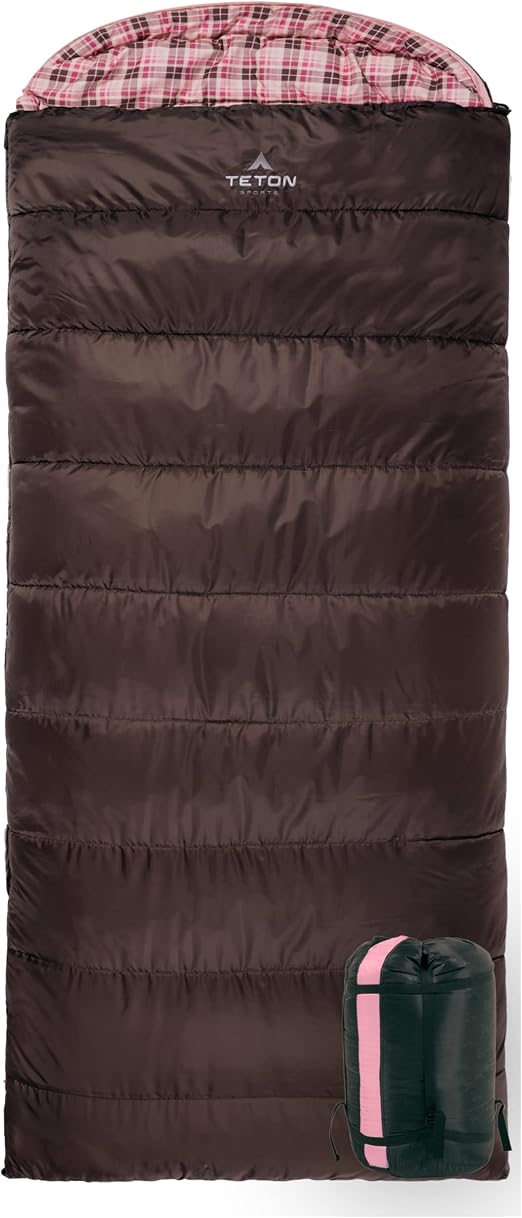
Teton Celsius Regular 0°F — Brown & Pink
Functionally identical to the grey version above, the brown and pink colorway exists because not every camper wants a drab olive or charcoal sleeping bag. The temperature rating, fill weight, mummy shape, hood, draft tube, and included stuff sack are all the same, so the only reason to pick this over the grey is aesthetics.
For a couple sharing a tent, a family where kids want their own color, or anyone who simply prefers a warmer visual, it's a useful option. The synthetic fill, snag-resistant zipper, and full-coverage hood still deliver the same reliable cold-weather performance as the rest of the Celsius line. Packed weight and compressibility match the grey version.
If you want the Teton Celsius experience in a less generic color, this is the version to choose.
VENTURE 4TH Backpacking Sleeping Bag
The VENTURE 4TH is a backpacking-oriented 3-season bag that leans toward cold-weather shoulder-season use rather than full winter. It's lighter and more compressible than the bulky rectangular bags earlier in this list, with a mummy shape, hood, and synthetic fill that handle frosty nights on the trail. It comes in single, XXL, and double XX-large sizes, which is rare at this price point.
The double version is genuinely useful for couples, parents camping with a kid, or anyone who wants the warmth-sharing benefit of a shared bag without paying premium prices. Weight is still manageable for short carries, and the silver/black shell shrugs off condensation better than lighter fabrics.
This is the pick if you're looking for a trail-capable cold-weather bag and want a real mummy shape instead of a car-camping rectangle.
Cheap Sleeping Bag Ideas: Staying Warmer Without a New Bag
If a new bag isn't in the budget yet, these low-cost fixes make the bag you already own warmer:
- Add a liner. A sleeping bag liner adds a layer of warmth for far less than a new bag and keeps the bag cleaner.
- Insulate from the ground. Put a closed-cell foam pad under your inflatable pad, or under the bag if you have nothing else. The cold ground pulls heat out of you faster than the night air does.
- Layer a blanket over the bag. A fleece or wool blanket, or an unzipped second sleeping bag used as a quilt, adds warmth on top where it doesn't crush the bag's own insulation.
- Nest two bags. A summer bag inside a roomier rectangular bag works as a makeshift cold-weather bag, as long as the outer bag isn't so tight that it compresses the insulation.
- Sleep dry. Change into dry base layers and a warm hat before bed rather than sleeping in the clothes you sweated in during the day.
- Fuel up. A snack before bed gives your body something to burn overnight.
Questions People Ask
Is a 20°F sleeping bag warm enough for winter camping?
Usually not for true winter nights. The 20°F number on a budget bag is often the lower limit rather than the comfort rating, so most people sleep comfortably in a 20°F bag only down into the 30s. For nights near or below 20°F, step up to a 0°F bag like the Teton Celsius or HiZYNICE and pair it with a well-insulated pad.
Are cheap sleeping bags warm enough for cold weather?
Yes, if you match the rating to the conditions and don't skimp on the pad. Budget synthetic bags are heavier and bulkier than premium down, but a 0°F synthetic bag on a good pad handles most cold-weather car camping at lower elevations.
Can you put two sleeping bags together for more warmth?
Yes. Nesting a smaller bag inside a larger one, or using an unzipped bag as a quilt on top, adds real warmth. The outer bag needs enough room that it doesn't squash the inner bag's insulation, since compressed insulation stops trapping heat.
Verdict
For most campers dipping into cold weather for the first time, the Teton Celsius 0°F is the best balance of warmth, weight, features, and proven reliability. It looks like a basic mummy bag, but the small details (draft tube, hood, included compression sack) make the difference between a comfortable night and a long, cold one.
If you're car camping and don't care about weight, the Coleman Brazos Cold-Weather or the HiZYNICE XXL 0°F are easier, roomier alternatives. For backpackers willing to carry a few extra pounds, the VENTURE 4TH is the lightest option here. The two Brazos bags and the brown/pink Celsius exist for shoppers who want a specific rating or color but the same general performance profile as their siblings.
Whichever bag you choose, pair it with a well-insulated sleeping pad, sleep in a dry base layer, and eat a high-calorie snack before bed. Cold-weather camping is mostly about managing heat loss, and a good budget bag does most of the work.
Related guides: Best Sleeping Bag Liners — The Cheapest Way to Add Warmth · How to Stay Warm Camping — The Layers and the Mistakes · Best Budget Sleeping Pads Under $50
Keep reading