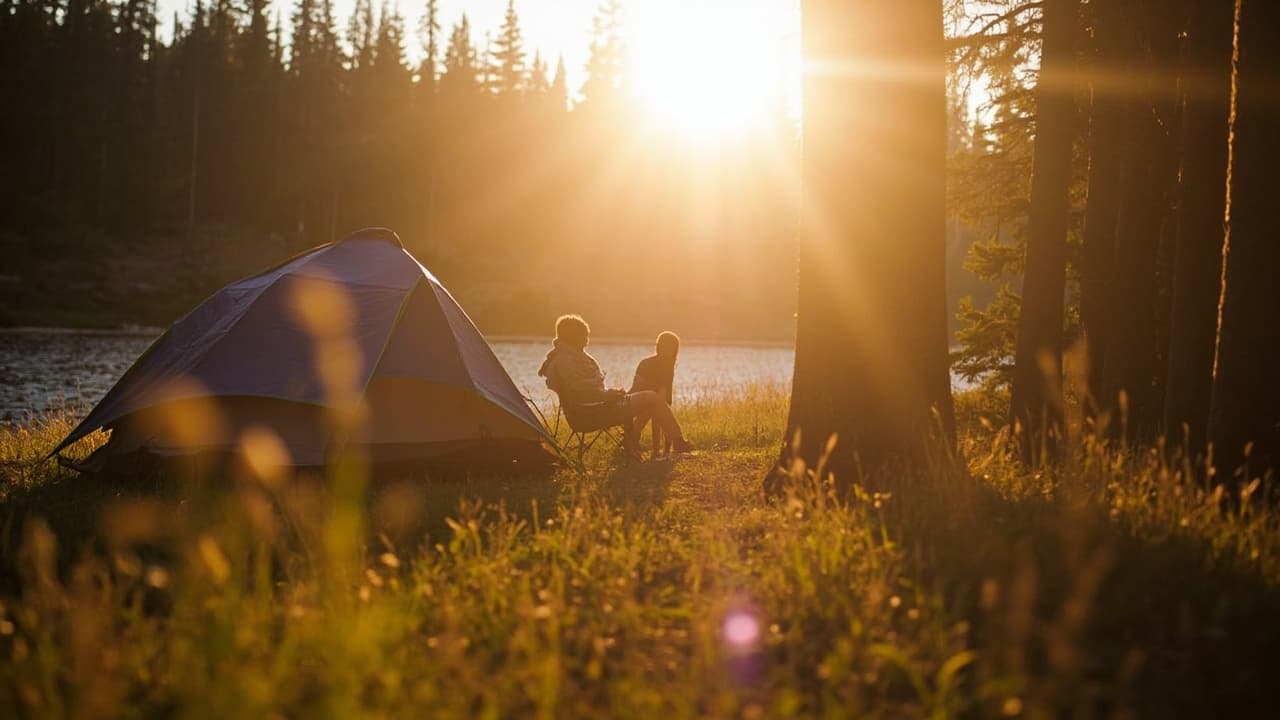
This guide helps you identify your camping style by breaking down the key differences between car camping and backpacking, so you avoid wasting money on the wrong gear category.
Car Camping vs Backpacking — Which One Are You Actually Buying For — Quick Comparison

TIMBER RIDGE 20-Second Quick Set-Up Camping Cot

AMACOOL Portable Camping Fan with LED Lantern- 40H Work Time

Gas One GS-3400P Propane or Butane Stove Dual Fuel Stove
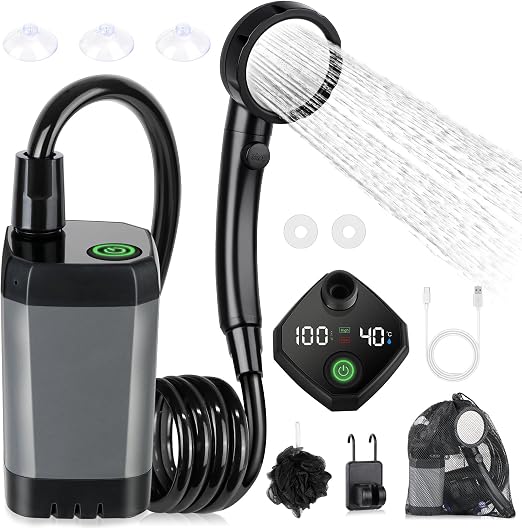
Spopal Portable Shower for Camping

TRIPTIPS Upgrade Retractable Portable Toilet Travel Toilet

COOZMENT 3.2 Gallon/5 Gallon Water Containers with Spigot
Prices and ratings last checked Oct 9, 2026 and can change at any time. Confirm the current price on Amazon before buying.
Before you start filling a cart, the most useful question a budget camper can answer isn't "which tent is best." It's "what kind of camping am I actually doing this year?" The gear lists for car camping and backpacking overlap far less than people expect, and buying the wrong category of gear is the single fastest way to waste a paycheck. Here's the framing guide that helps you sort yourself out and routes you into the right buying guides for what you actually do.
What Car Camping Actually Is
Car camping means a vehicle you can sleep near (or inside of) is the backbone of your trip. You pull into a developed campground, a dispersed pull-off, a Harvest Hosts driveway, or a Walmart parking lot. Your car, truck bed, or roof-top tent becomes the cargo hauler, so weight is mostly irrelevant and bulk is only mildly annoying. Everything you bring from a full-size cooler to a folding chair to a queen air mattress to a portable shower is on the table.
The defining trait is that you don't have to carry anything farther than the trunk to the picnic table. You can pack duplicates, spares, and luxuries. You can bring a real pillow, a real coffee setup, and a cooler that holds ice for three days.
What Backpacking Actually Is
Backpacking means everything you own for the next 1–7 nights goes on your back and walks into a place your car can't reach. The weight you carry, the volume it occupies, and the cost-per-gram of every item are the three constraints that decide every purchase. A four-pound camp chair sounds fine until you're walking eight miles uphill with it.
The defining trait is that you cannot bring duplicates, cannot bring things you only use once, and absolutely cannot bring anything that lives better in the trunk. A backpacking setup is a stripped, focused, weight-obsessed version of camping that happens to share a vocabulary with car camping.
The Question to Ask Before You Click "Buy"
Two questions settle almost every gear debate:
- Will I park next to my kitchen and my bed? If yes, you're car camping. Buy for comfort and capacity. If no, you're backpacking. Buy for weight and packability.
- What's the longest walk from my car to where I'll set up? Under 30 feet, car camping rules apply. Over a mile of trail, backpacking rules apply no matter how romantic the campsite looks.
If your answer changes depending on the trip, congratulations: you're a hybrid camper. The fix is to own one core kit in each category and stop trying to make one piece of gear do both jobs well. A two-pound backpacking stove is miserable at the picnic table; a heavy steel camp stove is a bad joke at a backcountry lake.
What Each Style Can Haul (and What It Can't)
Car camping has very few hard limits. You can haul a full-size camp kitchen, a folding table, a portable toilet, a shower rig, gallons of water in containers, and enough cold food in a cooler to last the whole trip. Bulk is annoying. Weight is mostly theoretical.
Backpacking has tight limits. A general rule is that a beginner should target roughly 20–25% of their body weight total pack weight, and experienced hikers aim lower. That cap rules out full-size chairs, large water jugs, heavy cots, and bulky coolers. It rewards compressible sleeping pads, lightweight stoves, and small-volume water filtration.
Pick 1: Car Camping Comfort — The Quick-Set Cot
A cot isn't a backpacking piece of gear; it's a car-camping piece of gear, full stop. If you're sleeping at a developed campground, a cot gets you off cold ground, off roots, and off the slope the pad always seems to find. The TIMBER RIDGE 20-Second Quick Set-Up Camping Cot folds out of the bag, has an aluminum frame, and packs back into a carry bag small enough to slide into the trunk. Rated support figure sits at 225 lbs. The zipper closure holds a sleeping bag in place so you don't slide off in the night. For car campers who want a real bed and don't care about the weight, this is the kind of upgrade that changes how you feel about car camping.
Check the TIMBER RIDGE 20-Second Quick Set-Up Camping Cot, Aluminum Folding Cot on Amazon
Pick 2: A Fan and Lantern Combo for Trunk-Only Trips
Once you're sleeping at a developed site in summer, airflow becomes the problem. A small battery-operated fan clipped inside the tent or above the cot is the difference between a usable night and a sweat-soaked one. The AMACOOL Portable Camping Fan with LED Lantern pulls double duty: a rechargeable fan plus a hanging LED lantern with a runtime figure in the 40-hour neighborhood. It hangs from a tent loop or a car-side awning and sips power. There's no backpacking application here, but for car camping this is one of the cheapest comfort upgrades per dollar on the market.
Check the AMACOOL Portable Camping Fan with LED Lantern on Amazon
Pick 3: A Dual-Fuel Camp Stove for the Picnic Table
For car camping, you can step up to a real two-burner-style propane or butane stove that lives on the picnic table. The Gas One GS-3400P runs on propane or butane canisters, comes with a carrying case, and is sized for cooking real meals in a real pan. It's the workhorse option for tailgate-style trips, base-camp setups, and emergency kits. Cook outdoors on the picnic table or a stable surface with ventilation; never run any fuel-burning device inside a vehicle, inside a tent, or inside a vestibule.
Check the Gas One GS-3400P Propane or Butane Stove on Amazon
Pick 4: A Portable Shower for Long Basecamp Stays
Car campers who stay 3+ nights at the same site eventually want to be clean. A portable camp shower with a rechargeable battery and a hanging pump turns a jug of water into something that feels like a real shower. The Spopal Portable Shower for Camping has a long-lasting battery figure, an LED display, four spray modes, and an IPX7 waterproof rating. It works from a hanging hook on a tree branch, an awning, or the side mirror of a vehicle. For backpackers this is useless; for car campers it's borderline life-changing at a hot, dusty site.
Check the Spopal Portable Shower for Camping on Amazon
Pick 5: A Portable Toilet for Site Comfort
The single piece of gear that turns car camping from "glorified sleeping in the dirt" to "actually comfortable" is a portable toilet. The TRIPTIPS Upgrade Retractable Portable Toilet is adjustable in height, folds flat, and works for adults and kids. It pairs with waste bags, doesn't need any setup beyond unfolding, and removes the middle-of-the-night walk to the campground restroom. Backpackers obviously can't carry one; car campers with back, knee, or middle-of-the-night anxiety issues absolutely should.
Check the TRIPTIPS Upgrade Retractable Portable Toilet on Amazon
Pick 6: A Water Jug for Car-Based Hauling
Backpackers carry water in a bottle or a soft flask. Car campers haul water in bulk. The COOZMENT Water Containers line includes a 3.2-gallon and a 5-gallon BPA-free jug with a spigot, in military green. They're stackable, food-safe, and built to sit on a camp table or in the back of the truck. This is pure car-camping gear — the kind of thing you wish you had on day two of a long stay at a primitive site without potable water. Drink only treated water; never drink water straight from an open source.
Check the COOZMENT 3.2 Gallon/5 Gallon Water Containers with Spigot on Amazon
How to Choose Your Path
If most of your trips this year are at developed campgrounds, state parks, or weekend basecamps: you're car camping. Prioritize comfort, capacity, and bulk-friendly gear. Save your backpacking dollars for later.
If most of your trips this year involve trailheads, permits, and miles: you're backpacking. Prioritize weight, packability, and durability. Save your car-camping dollars for later.
If you're split: start with one core car-camping kit (cot, fan, stove, lantern, jug, first-aid) and add a small backpacking subset only after you've actually taken a backcountry trip. The hybrid kits sold online tend to be bad at both jobs.
Verdict
The fastest path to gear you'll actually use is to stop pretending car camping and backpacking are the same hobby with different scenery. They aren't. Pick the one you'll do most often in the next 12 months, buy accordingly, and let the second kit grow naturally. Every dollar spent on the wrong category is a dollar you'll resent at the trailhead or at the picnic table.
Related guides: How to Choose a Campsite — The Ten Minutes That Decide Your Night · Budget Camping Hacks That Actually Work
Keep reading