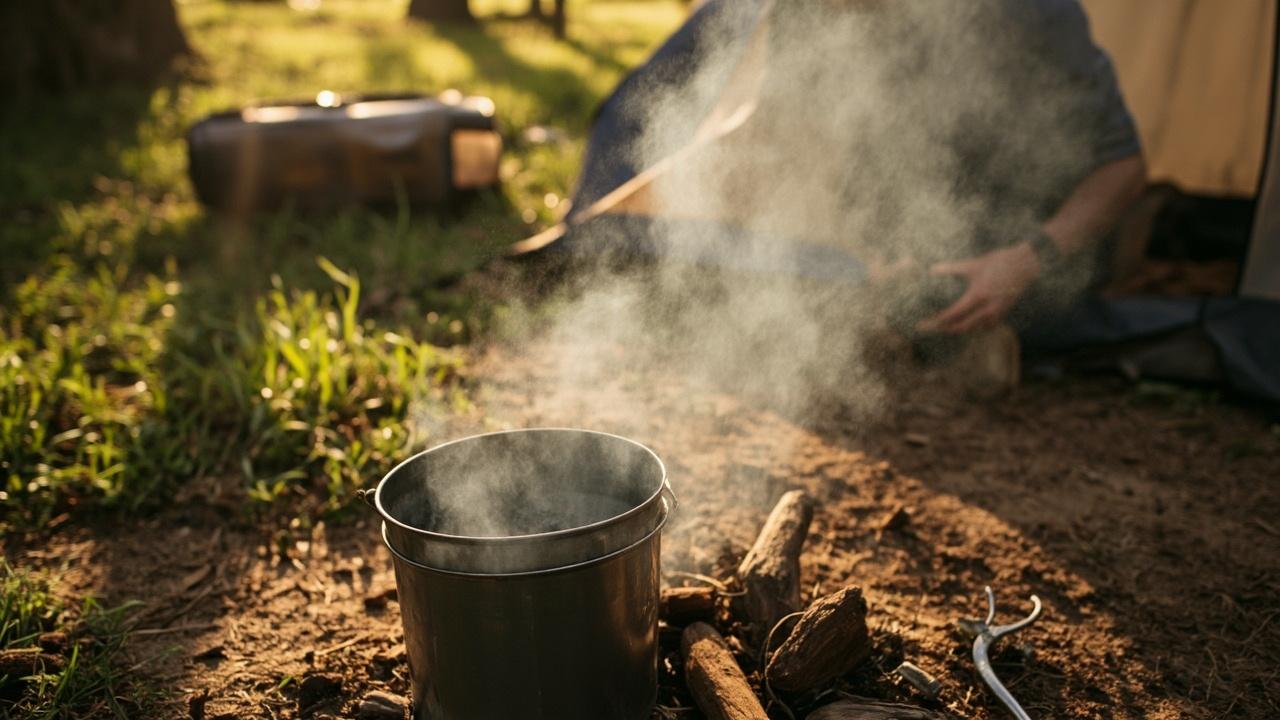
Learn how to set up a cheap three-bin camp dish station, choose a collapsible sink that folds flat, and dispose of gray water without harming the campsite.
Camp Dishwashing on a Budget — The Three-Bin Setup and Leave No Trace — Quick Comparison

Tiawudi 2 Pack Collapsible Sink with 2.25 Gal / 8.5L Each

2.4Gal Collapsible Dish Basin with Drain Plug

2 Pack Collapsible Sink with 2.25 Gal / 8.5L Each

Collapsible Wash Basin

OXO Outdoor Kitchen Gear Wash

Collapsible Dish Basin with Drain Plug
Prices and ratings last checked Nov 22, 2026 and can change at any time. Confirm the current price on Amazon before buying.
Dirty dishes are the chore that makes a camp kitchen feel like work. A pot of crusted oatmeal sits on the picnic table overnight, a raccoon finds it, and the morning starts with cleanup instead of coffee. The fix is cheap and simple: three collapsible bins, a strainer, a little soap, and a plan for where the dirty water goes.
This guide covers the three-bin method, how to wash dishes while camping without leaving a mess behind, what to look for in a collapsible sink, and six budget-friendly basins that fold flat.
Why the Three-Bin Method Works
Most campground dishwashing goes wrong in one of two ways. Either everything gets scrubbed in a single tub of increasingly greasy water, or people rinse plates directly under a spigot or in a lake. The three-bin setup solves both problems.
Bin 1: Wash. Warm water with a small squirt of biodegradable soap. Scrape plates first so you are cleaning dishes, not making soup. Heat water on your stove outside in open air. Never run a stove inside a tent or closed vehicle.
Bin 2: Rinse. Clean water only, no soap. This pulls soap residue off before the final step. Use treated or potable water here, the same water you would drink, since these dishes will touch your food.
Bin 3: Sanitize. Clean water with a sanitizing agent mixed according to its label directions. Many campers use a small amount of unscented household bleach. Dip, then let dishes air dry on a rack or clean towel.
Work in that order, from cleanest-looking dishes to dirtiest. Cups and utensils go first, greasy pans last. The wash water stays usable longer, and you need fewer refills.
Leave No Trace: Where the Dirty Water Goes
This is the part most people skip, and it matters.
Strain before you dump. Pour your wash and rinse water through a fine mesh strainer or a scrap of mesh cloth. The food bits that collect go into your trash bag and get packed out. Scattered food scraps attract wildlife and teach animals that campsites mean dinner.
Scatter greywater 200 feet from water sources. Leave No Trace guidance is to carry strained greywater well away from lakes, streams, and springs, roughly 200 feet or about 70 adult steps, and broadcast it across a wide area instead of pouring it in one spot. If your campground has a designated greywater drain or utility sink, use that instead.
Biodegradable soap still stays out of lakes and streams. "Biodegradable" means the soap breaks down in soil with help from microorganisms. It does not mean it is safe to put directly into water, where it can still harm aquatic life. Wash in a bin, never in the creek, regardless of what the bottle says.
Use less soap than you think. A few drops handle a camp-sized load. Less soap means easier rinsing and less residue going into the ground.
Store dishes with your food. Once clean, dirty or clean cookware and food go into a vehicle, hard-sided locker, or bear-resistant container as required at your site. Never store food or food-smelling gear in your tent.
For more on keeping the whole cooking area organized, see our guide to camp kitchen organization.
How to Choose a Collapsible Sink for Camping
A good camping dish washing station is mostly about the bins. Here is what to weigh:
- Capacity. Larger basins hold a full pot or skillet. Smaller ones are easier to fill and carry when your water is coming from a jug. Mixed sizes work well: a big wash bin and smaller rinse and sanitize bins.
- Drain plug. A plug lets you empty a bin through a strainer without tipping a heavy, sloshing tub. Very handy when you are straining greywater.
- How many you get. Two-packs cover two of your three bins. Pair a two-pack with a single basin and you have the full setup.
- Collapsed size. Every basin here folds flat or nearly flat, which is the whole point for car campers short on trunk space.
- Extras. Some basins double as a cutting board or come as part of a dry-and-stow system. Useful if you want fewer pieces of gear.
The Picks
Tiawudi 2 Pack Collapsible Sink
This two-pack gives you two basins at 2.25 gallons (8.5L) each, which knocks out two-thirds of a three-bin station in one purchase. The listing markets it for washing dishes, camping, hiking, and home use, so it can earn its keep between trips too. Matched sizes keep things simple: use one for rinse and one for sanitize, then add a larger wash basin.
Check the Tiawudi 2 Pack Collapsible Sink on Amazon
2.4Gal Collapsible Dish Basin with Drain Plug
A single basin at 2.4 gallons with a drain plug. The plug is the standout feature for Leave No Trace dishwashing, since you can let water out slowly through a strainer instead of dumping the whole tub at once. It is also listed as a baby bottle wash basin, a nice bonus for families camping with little ones. A good choice for your wash bin.
Check the 2.4Gal Collapsible Dish Basin on Amazon
2 Pack Collapsible Sink, Foldable Dish Tub
Another two-pack at 2.25 gallons (8.5L) each, described as a foldable dish tub and portable washing basin. Capacity matches the Tiawudi pack, so treat these as interchangeable and choose on availability or color. Pairing either two-pack with a single drain-plug basin gives you a complete three-bin setup.
Check the 2 Pack Collapsible Sink on Amazon
Collapsible Wash Basin, 7.5L Dish Tub with Cutting Board
This 7.5L basin is a 2-in-1 design: dishpan plus cutting board. At camp, that means one piece of gear covers food prep before the meal and washing after it. The listing also mentions BBQ prep and general cleaning. It is smaller than the others here, so it works best as a rinse or sanitize bin rather than the main wash tub for big pots.
Check the Collapsible Wash Basin with Cutting Board on Amazon
OXO Outdoor Kitchen Gear Wash, Dry and Stow System
The OXO takes a different approach from a plain basin. As the name says, it is built around washing, drying, and stowing, so it handles the after-wash step that loose bins leave to you. If your camp kitchen tends to sprawl, a system meant to pack dishes away when they are dry can keep things tidier. Pair it with separate basins if you want a true three-bin process.
Check the OXO Outdoor Kitchen Gear Wash, Dry and Stow System on Amazon
Collapsible Dish Basin with Drain Plug, 9L
At 9L, this is the largest single basin on the list, and it has a drain plug. That makes it the natural wash bin: room for a skillet or stockpot, plus controlled draining through a strainer when you are done. If you buy only one single basin to round out a two-pack, this is a strong candidate.
Check the 9L Collapsible Dish Basin on Amazon
Verdict
For a complete, budget-friendly three-bin station, buy one two-pack (the Tiawudi or the comparable 2.25-gallon pack) for rinse and sanitize, then add the 9L drain-plug basin as your wash bin. That combination covers capacity where you need it and gives you a plug for clean, strained draining.
If space is the priority, the 7.5L basin with cutting board does double duty. If drying and packing up is your pain point, the OXO system is built for that step.
Whatever you choose, the method matters more than the gear: scrape, wash, rinse, sanitize, strain food bits into the trash, scatter greywater 200 feet from water, and keep even biodegradable soap out of lakes and streams.
Related guides: Best Camp Kitchen Organization — Pack, Cook, and Clean Smarter · Cheap Camping Cookware That Actually Works · Affordable Water Filtration for Camping
Keep reading