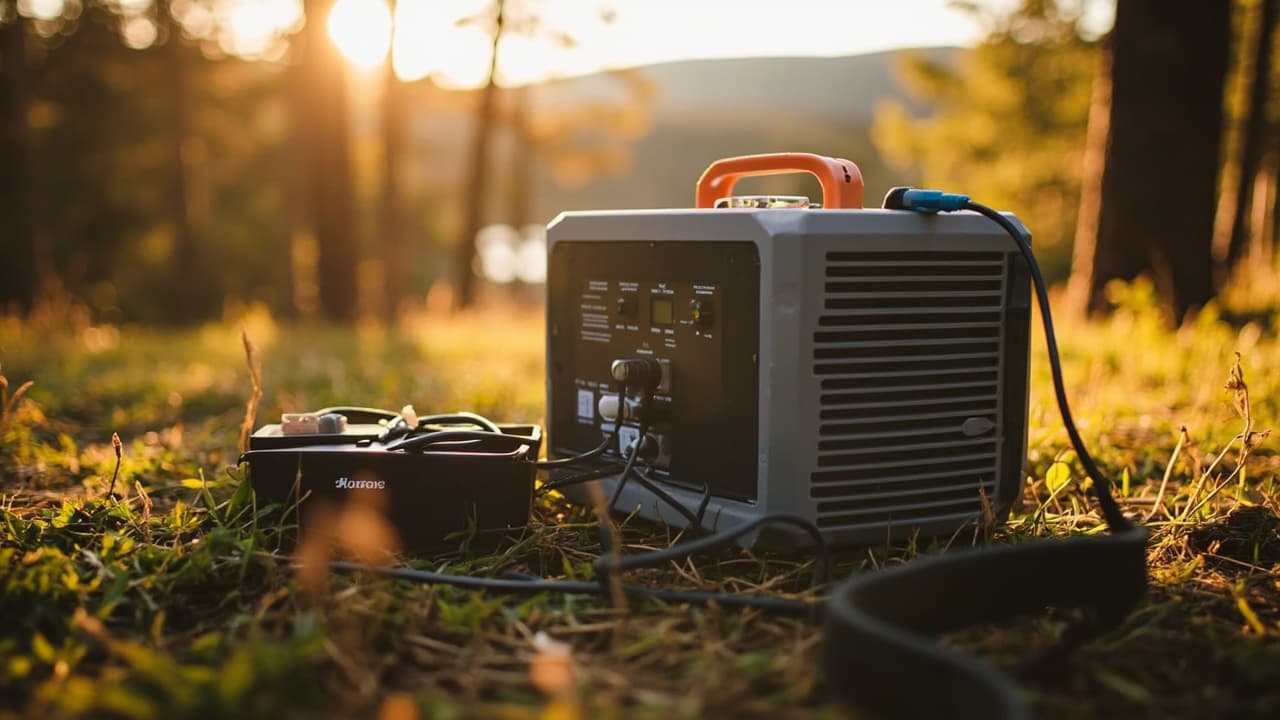
Side-by-side comparison of 200W vs 500W portable power stations under $400, showing what each can actually run and how to pick the right size for your needs.
200W vs 500W Portable Power Stations Under $400 — Which Size You Actually Need — Quick Comparison

Jackery Explorer 300 Portable Power Station
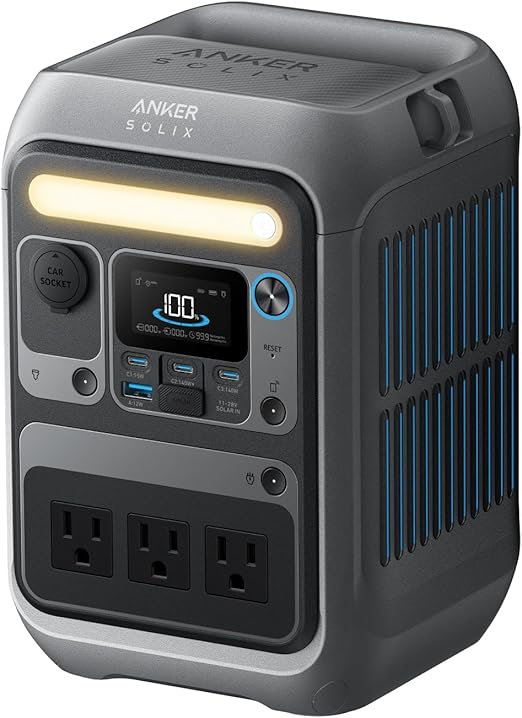
Anker SOLIX C300 Portable Power Station

OUPES Exodus 700 Portable Power Station

CyberPower CP1500PFCLCD PFC Sinewave UPS Battery Backup

Anker SOLIX C300 DC Portable Power Station

BLUETTI Elite 30 V2 Portable Power Station 288Wh 600W LFP
Prices and ratings last checked Oct 9, 2026 and can change at any time. Confirm the current price on Amazon before buying.
The watt number on the front of a portable power station tells you almost nothing useful on its own. The number that actually decides your night is watt-hours, and how much of it the inverter, ports, and battery chemistry let you use. This guide is about sizing. It walks through what a 200W-class station will genuinely run on a car-camping trip, where a 500W-class unit earns its extra weight, and where neither size is the right answer.
If your budget is tighter than this category and a sub-$200 pick would do the job, see our roundup of Best Portable Power Stations for Camping Under $200. The stations below are for when a 100–150Wh unit is clearly not going to cover your evening.
The Three Numbers That Actually Matter
Power station listings throw around watt-hours, rated watts, surge watts, and battery type. Here is the plain-English version.
Watt-hours (Wh) is the size of the fuel tank. A 300Wh station holds roughly the energy of a 300-watt device running for one hour, or a 30-watt device for ten hours. If you only remember one number, remember this one.
Rated watts (the "200W" or "500W") is how much continuous power the inverter can deliver. It is the ceiling on what you can plug in, not how long things will run.
Surge watts is a brief spike the inverter tolerates when a motor first spins up. A small fan might be rated at 30W but pull 60–80W for a fraction of a second at startup. If surge is below what the device needs, it will not turn on at all.
Battery chemistry quietly decides how long the unit will last. Older NMC packs are lighter for the same Wh but degrade faster in storage. LiFePO4 (LFP) is heavier per Wh but tolerates more charge cycles and a wider temperature range. If a listing says LiFePO4, that is a real longevity point.
What a 200W-Class Station Will Realistically Run
A 200–300W inverter is enough for the camping electronics most people actually pack. Anything that makes heat — kettles, hair dryers, electric blankets, space heaters — will either trip the inverter or drain the battery inside an hour. Be honest about that going in.
A realistic overnight on a 288–300Wh station looks like this:
- Phone charging (10–15W): multiple full top-ups.
- A pair of string lights (5–10W): all night with room to spare.
- A 12V cooler fan and control board cycling on and off (10–20W average): roughly a full day and night.
- A CPAP without the humidifier (30–60W): most of one night on a 300Wh pack.
- A small clip fan on medium (10–20W): overnight plus spare capacity.
- A laptop top-up (45–65W): an hour or two of runtime or a partial charge.
The catch with CPAP is the humidifier. Heated humidification can pull 50W by itself and turn a single night into a coin toss. If you depend on a CPAP, run it on the machine's lowest setting, use the heated hose sparingly, and consider a dedicated 12V CPAP cable that bypasses the inverter. If your model is listed, confirm the watt draw in your machine's manual rather than guessing.
A 200W station will not run a standard 1500W household kettle. It will not run a hair dryer. It will not run a space heater, and you should not be trying to heat a tent with electricity from a battery anyway — that's a tent-fill problem, not a gear-fill problem, and a good sleeping bag and pad do that job for free. Use the station for lights, comms, and a fan, and let your sleep system do the sleeping.
What a 500W-Class Station Adds
The jump from 300Wh to 500–600Wh roughly doubles the fuel tank. The jump from a 300W to a 500–700W inverter opens up a wider range of small appliances — laptops, camera batteries, larger fans, projector for movie night, a 12V fridge compressor, even a small induction cooktop on its lowest setting for a short boil.
What 500W still will not do is replace a propane stove or a real heater. A 600W inverter can run a small induction plate, but a liter of water on induction pulls enough wattage that a 500Wh battery is gone in roughly an hour of continuous boiling. If you need to boil water for coffee, a stove still wins on weight, cost, and runtime. See our Budget Portable Camping Stoves Compared for that side of the kitchen.
How to Choose Between 200W and 500W
Walk through these in order. The first one that gives you a clear answer is the right one.
Step 1: Make a load list. Write down every device you actually plan to run at camp, with each one's watt draw from its label or manual. Add them up.
Step 2: Estimate overnight watt-hours. Multiply each device's watts by the hours you expect it to run. Add those. That number is your minimum battery size, with at least 20% headroom for inverter inefficiency.
Step 3: Look at the biggest single load. If your biggest item is over 300W — a projector, a small rice cooker, a 12V fridge compressor surge — a 200W inverter will trip. Move up to a 500W or higher class.
Step 4: Consider charging. A bigger battery is also a bigger bank to refill. A 100W panel in full sun puts back roughly 60–70Wh usable per hour after losses. If you camp for two nights, factor in whether you'll have time to refill, drive time with a 12V car charger, or shore power.
Step 5: Weight and trunk space. A 288Wh station sits around 7–9 lbs. A 576–700Wh station is usually 14–17 lbs. That matters when you're hauling it from the car to the site.
If your load list is phones, lights, a fan, and a 12V cooler, 200–300Wh is genuinely enough. If you add a CPAP, a laptop every evening, a projector, or you camp for two-plus nights without driving, the 500W class earns its weight.
The Picks
200–300W Class: Light, Simple, Overnight-Plus
Jackery Explorer 300 Portable Power Station, 292Wh — Jackery Explorer 300 Portable Power Station. A 292Wh pack with a 300W-rated inverter. Comfortably handles phone charging, lights, a fan, a 12V cooler, and CPAP on low for most of a night. The form factor is the kind of brick you can leave on a picnic table without thinking about it.
Anker SOLIX C300 Portable Power Station, 288Wh Solar Generator for Camping — Anker SOLIX C300 Portable Power Station. Similar capacity class, listed as a solar generator, so the inputs and outputs are tuned for camping. Pair it with a 100W panel and you've got a weekend-ready setup for one or two people.
Anker SOLIX C300 DC Portable Power Station, 288Wh, 300W, Outdoor Camping — Anker SOLIX C300 DC Portable Power Station. A DC-focused variant of the C300 line. The DC-only output path cuts inverter losses, which is meaningful when you're running small 12V devices like string lights and cooler controllers from a limited pack.
BLUETTI Elite 30 V2 Portable Power Station 288Wh 600W LFP Solar Generator — BLUETTI Elite 30 V2 Portable Power Station. A 288Wh pack with a higher 600W inverter rating and LFP chemistry. The LFP cell is the real story for anyone who camps more than a handful of times a year — it holds up better to repeated cycles than older NMC packs.
500W-Class: Longer Runtime, More Devices
OUPES Exodus 700 Portable Power Station, 576Wh 700W LiFePO4 Solar Generator — OUPES Exodus 700 Portable Power Station. This is the jump-up pick. Twice the watt-hours of the 300Wh class and a 700W inverter. The LFP cell and 576Wh capacity mean a CPAP, fan, lights, and phone charging for two nights without a recharge. It is heavier — expect a two-handed carry — but for car camping that tradeoff is usually worth it.
One Honorable Mention for a Different Job
CyberPower CP1500PFCLCD PFC Sinewave UPS Battery Backup and Surge Protector — CyberPower CP1500PFCLCD. Not a camping unit, and not what most people think of as a power station. But it is on this list because a sinewave UPS is the right tool for protecting a desktop computer, a network setup, or sensitive electronics at home during outages. If you're reading this guide because you also want home backup, a pure sine wave UPS is the safer answer than plugging a sensitive device into a small inverter.
Verdict
Buy the 200–300W class if your evening is phones, lights, a fan, and maybe a 12V cooler or a CPAP on its lowest setting. The Jackery Explorer 300, Anker SOLIX C300, Anker SOLIX C300 DC, and BLUETTI Elite 30 V2 all sit in that comfort zone.
Buy the 500W-class OUPES Exodus 700 if you're running a CPAP with heated humidifier, charging laptops every evening, camping two-plus nights without driving, or running anything that needs a 500W+ inverter surge. The LiFePO4 cell makes it the better long-term buy if it fits your weight budget.
Buy neither if you actually need to boil water, dry hair, or heat a space. A propane stove and a real sleeping bag solve those problems for a tiny fraction of the cost.
Whichever you pick, plan loads in watt-hours, not watts, and do not lean on any battery pack to warm a tent. The best camping night comes from the right sleep system, not the biggest inverter.
Related guides: Best Portable Power Stations for Camping Under $200 · Best Solar Chargers for Camping · Best Camping Fans for Tents
Keep reading