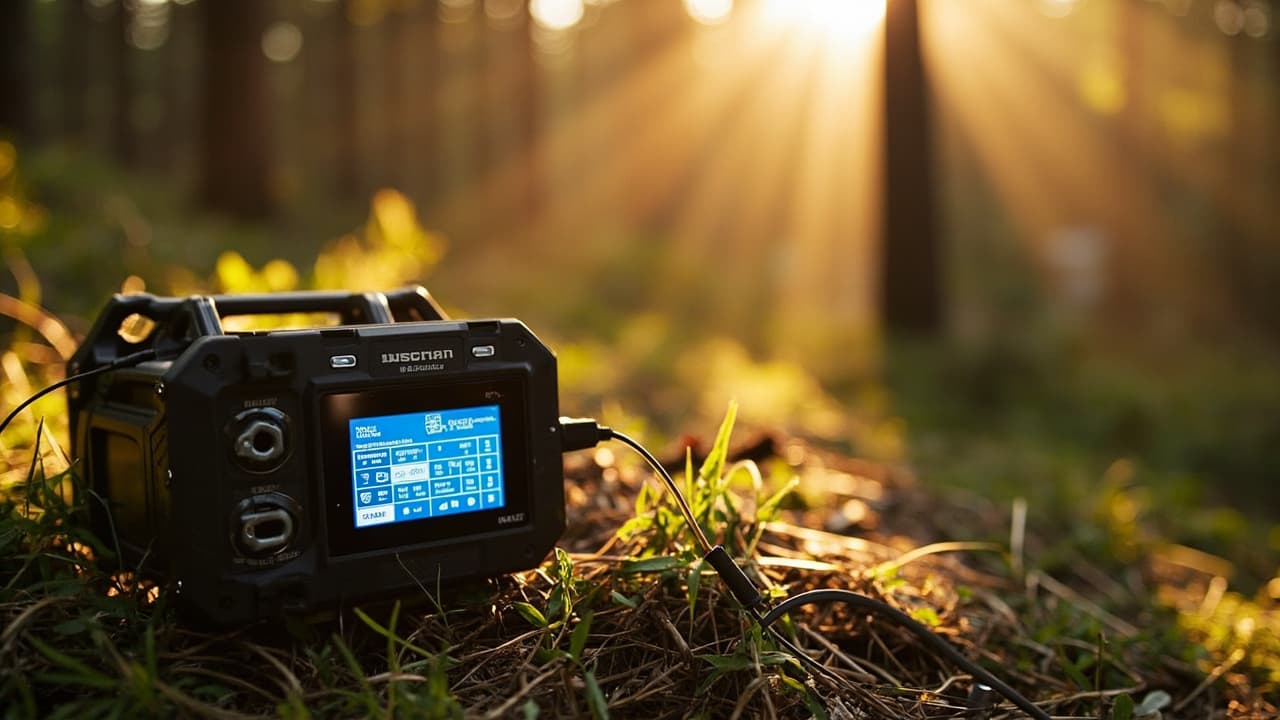
Compare top-rated camping power stations under $200, learn which specs actually matter, and find the right balance between capacity, ports, and price for your trips.
Best Portable Power Stations for Camping Under $200 — Quick Comparison

Portable Power Station 330W
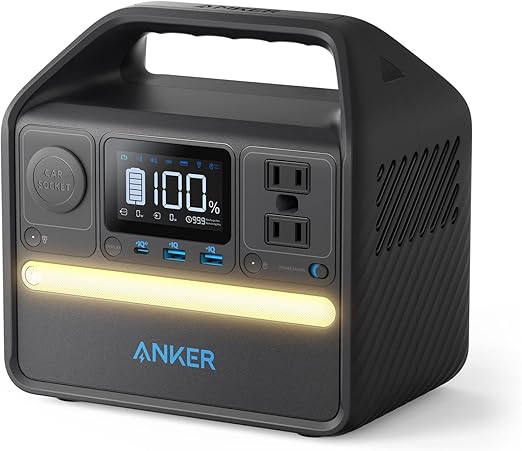
Anker 521 Portable Power Station Upgraded with LiFePO4

ALLWEI Portable Power Station 300W

VTOMAN FlashSpeed 300 Portable Power Station

DaranEner Portable Power Station

EBL Portable Power Station 500w
Prices and ratings last checked Oct 4, 2026 and can change at any time. Confirm the current price on Amazon before buying.
Camping has changed. Even a simple weekend in the woods usually means lights, a phone, maybe a CPAP, a camera, or a laptop for trip planning. A portable power station quietly handles all of it, replacing a tangle of battery banks with one box that can run small appliances, recharge fast from a wall, and top up from a folding panel once you are parked at the campsite.
Models under the $200 mark used to mean flimsy lead-acid bricks with one slow USB port. The current crop is almost all lithium, with LiFePO4 chemistry showing up in many of them, and offer pure sine wave AC outlets, USB-C PD around 60W for laptops, and even wireless charging pads on top. The trade-off is capacity: most picks here sit between roughly 190Wh and 520Wh, which is plenty for a phone and a lantern for many nights, but not enough to run a full-size fridge for a week.
How to Choose a Portable Power Station for Camping
Capacity and inverter size are the two numbers that matter most, and they pull in opposite directions from price.
Wh (watt-hours) tells you how much energy is stored. Roughly, a 250Wh station will recharge a phone about 15–20 times, run a 10W LED light for around 20 hours, or power a small CPAP for a night or two. If you only need to keep phones and lights alive over a weekend, 200Wh–300Wh is a sweet spot. Pushing toward 500Wh opens the door to short bursts of laptop charging, camera batteries, and small appliances like a portable fan.
Inverter size, listed in watts, tells you what the AC outlets can handle at one time. A 300W inverter will run a laptop, a camera charger, or a small fan. It will not run a hair dryer or a kettle, and the station will shut off if you try. Peak ratings briefly handle a brief surge, so do not use them as a continuous number.
Battery chemistry matters for lifespan. LiFePO4 cells typically rate for several thousand cycles before capacity drops meaningfully, which is useful if you camp often or want a unit for emergencies at home. Older NMC lithium cells are lighter but often wear faster.
Ports decide how useful the station actually is. Look for at least one 60W USB-C PD port if you carry a laptop. Pure sine wave AC matters for sensitive electronics such as camera batteries and CPAP machines. MPPT solar charging helps if you plan to pair a folding panel. Wireless charging on top is convenient for a phone overnight but slow.
Weight and form factor matter more than people expect. A 12-pound station packs comfortably into a car trunk. A 20-pound station starts to fight you on a short hike from the parking lot to the tent. For car camping, both are fine. For backpacking, a dedicated power bank is still the better pick.
Finally, think about charging speed. Most units reach 80% in around an hour from a wall outlet, which is enough for a quick top-up before bed. Slower units force you to plan the night around charging.
The Picks
1. 330W 288.6Wh Solar Generator with Wireless Charging
This is the most feature-dense pick in the budget tier. The inverter is rated to 330W continuous, the battery is 288.6Wh, and the unit ships with both a 120V pure sine wave AC outlet and a 5W wireless charging pad on top for a phone. There is also a 60W USB-C PD port, which is the right size to charge a MacBook Air or a USB-C powered camera.
It is a strong fit for campers who want one box to handle phones, a laptop, lights, and small camera chargers without juggling three battery banks. The wireless pad is a small but genuinely useful touch for overnight tent setup. The pure sine wave output keeps sensitive gear happy, and 288.6Wh is enough capacity to ride out a couple of cloudy days at a small cabin.
If there is a downside, it is that 330W continuous pushes the price close to the ceiling of this category, so you are paying for the inverter headroom rather than extra capacity.
Check the 330W 288.6Wh Solar Generator on Amazon
3. ALLWEI 300W 256Wh LiFePO4 Power Station
The ALLWEI sits very close to the Anker 521 on paper and uses the same LiFePO4 chemistry. You get 256Wh of capacity, a 300W continuous inverter, a pure sine wave AC outlet, and a 60W USB-C PD port. MPPT solar charging is built in, which is a useful feature if you plan to add a folding panel later.
For shoppers who care more about specification than brand, this is a strong value. The BMS protection adds an extra safety layer for unattended overnight charging in a tent. Capacity and ports land in the same range as the Anker pick, so the decision usually comes down to which one is in stock and which you find more comfortable to carry.
It is a sensible everyday pick for car campers running lights, phones, a fan, and an occasional laptop top-up.
Check the ALLWEI 300W Power Station on Amazon
4. VTOMAN FlashSpeed 300 Power Station (LiFePO4, 230Wh)
The FlashSpeed 300 trades a little capacity for fast charging and long cycle life. The 230Wh LiFePO4 cell is rated for around 3000 cycles, which is several years of weekend use before you see meaningful capacity loss. The 100W USB-C PD port is a step above most competitors in this price range, which matters if you carry a 13- or 14-inch laptop or a USB-C powered monitor.
Six outputs cover the usual mix of AC, USB-A, USB-C, and DC, and the fast-charge feature gets the unit back to full from a wall noticeably faster than older stations. With a 600W peak, it tolerates the brief surge from small motors and camera battery chargers.
The trade-off is that 230Wh is on the lower end, so it works best for shorter trips or as a secondary backup unit alongside a larger station at home.
Check the VTOMAN FlashSpeed 300 on Amazon
5. DaranEner 192Wh LiFePO4 Power Station
The DaranEner is the smallest and lightest pick in this lineup, which makes it the best fit when capacity is not the priority. At 192Wh, it is built to keep phones, headlamps, and a small camera battery alive across a couple of nights rather than power a laptop all weekend.
It still uses LiFePO4 cells for long cycle life, runs a 300W pure sine wave inverter with a 600W peak, and offers a 60W USB-C PD port for faster top-ups. The form factor is closer to a chunky paperback than a car battery, which makes it easy to stash in a daypack.
It is a good pick for ultralight car campers, photographers who carry multiple small batteries, and anyone who wants a smaller secondary station for a hammock setup or a picnic.
Check the DaranEner 192Wh Power Station on Amazon
6. EBL 500W 519.48Wh Portable Power Station
The EBL is the capacity leader in this group, with 519.48Wh of storage and a 500W continuous inverter rated to 1000W peak. Two 120V AC outlets, a 10-port layout, and a range of USB and DC outputs mean multiple people can charge at the same time without anyone unplugging a fridge-shaped cooler.
It is the right pick for a small group, a basecamp with a portable fridge, or anyone who wants one station to handle both weekend camping and short home outages. The capacity is roughly double the mid-tier picks, which translates to many more phone and laptop cycles between charges.
The trade-off is weight and cost. It is the heaviest unit here, so it lives in the car rather than the backpack.
Check the EBL 519Wh Power Station on Amazon
Quick Comparison
For most campers who want one station that does everything without pushing the budget, the 330W 288.6Wh Solar Generator is the most well-rounded pick. If brand trust matters, the Anker 521 is the safe choice. If pure spec value matters, the ALLWEI matches the Anker for less. For long lifespan and faster USB-C, the VTOMAN FlashSpeed 300 stands out. If size is the priority, the DaranEner 192Wh goes almost anywhere. For group camping or home backup duty, the EBL 519Wh carries the most energy by a wide margin.
How We Picked
Capacity, inverter size, battery chemistry, port selection, weight, and charging speed were scored across all six models. Stations with LiFePO4 cells, pure sine wave AC, a 60W or higher USB-C PD port, and MPPT solar input ranked higher because those features stay useful for years. Capacity targets of 200–500Wh match the typical weekend camping load for phones, lights, and laptops without overshooting the budget.
Verdict
A budget portable power station under $200 is no longer a compromise. For most campers, the 330W 288.6Wh Solar Generator offers the best blend of capacity, ports, and convenience features in this price band, including the rarely seen wireless charging pad. Heavy users and group campers should look at the EBL 519Wh. Ultralight campers will appreciate the DaranEner 192Wh. Anyone already in the Anker ecosystem will be happy with the Anker 521.
Looking for more ways to light and power the campsite? Read our guides on affordable headlamps for camping and the best portable camping fans.
Keep reading