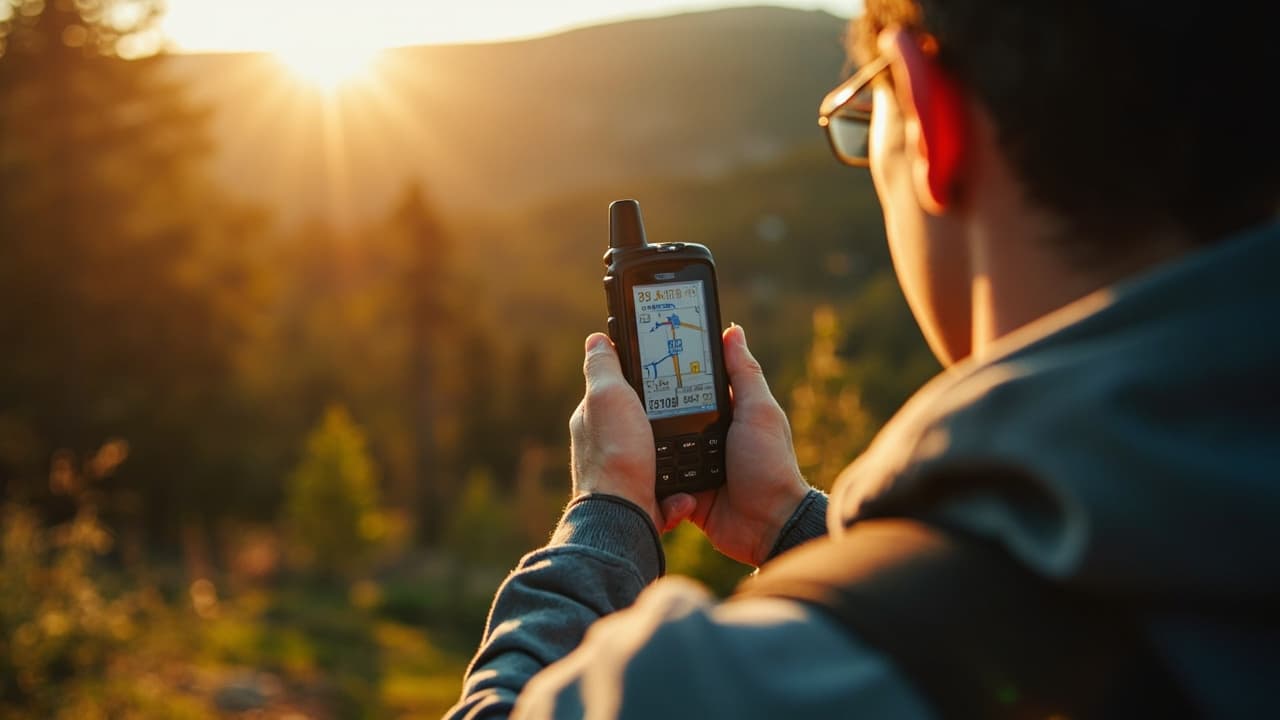
Your phone works for most trails, but these backup navigation tools work when batteries die and signal drops.
Best Budget GPS and Compass for Hiking — Quick Comparison

Garmin inReach® Mini 3 Plus

Garmin GPSMAP 65s

ZOLEO Satellite Communicator

Garmin inReach® Messenger Satellite Communicator

Spot Gen 4 Satellite GPS Messenger

Garmin Foretrex 801
Prices and ratings last checked Oct 9, 2026 and can change at any time. Confirm the current price on Amazon before buying.
A paper map, a baseplate compass, and the ability to use them will never fail you, never need a subscription, and never run out of battery. That trio still belongs in every hiker's pack as a non-negotiable backup. What this guide covers is the layer on top of that: handheld GPS units and satellite communicators that turn a wilderness trek into a tracked, shareable, rescuable experience without forcing a credit card statement that ruins the trip.
The picks below split into two camps. Pure mapping GPS units record your track, drop waypoints, and follow a breadcrumb trail back to the trailhead. Satellite messengers add two-way texting and emergency SOS over cellular dead zones, which is genuinely lifesaving but does require an active subscription on top of the device cost. The right pick depends on where you hike and who waits at home for you.
How to Choose a Budget GPS or Satellite Messenger
Start with the most important question: do you need to send a signal, or just follow one? Most weekend hikers on marked trails only need the second. Backcountry travelers, solo hikers, and people heading into places with no cell service and no margin for error need the first.
Mapping vs. messaging. Handheld mapping units are for following a track, marking a water source, and checking how far you still have to go. Satellite messengers are smaller, lighter, and add texting plus an SOS button that connects to a rescue coordination center. Some, like the inReach line, do both, but they cost more and still require a subscription plan.
Battery life versus screen size. A wrist-mounted unit or a compact messenger trades screen real estate for days of battery life. A button-operated handheld with a color display gives you a real map view but burns through charge faster, especially with the backlight on or the satellite receiver working hard under tree cover.
Subscription requirement. Every satellite communicator on this list requires an active plan to actually send messages or trigger SOS. Mapping handhelds without a subscription, like a basic GPSMAP, work right out of the box for navigation, just not for two-way communication. Factor the monthly plan into the real cost.
Durability and water resistance. Hiking gear gets rained on, dropped in creek crossings, and bounced off granite. Look for an IPX7 rating or higher, meaning the unit survives immersion in a meter of water for thirty minutes. Anything less is fine for fair-weather day hikes only.
Ease of use in gloves and cold. Touchscreens are great until you are wearing gloves at 30°F. Button-operated units with a tactile D-pad and dedicated "mark" and "go-to" buttons are faster in the field when your hands are cold, wet, or both.
Weight and carry style. A 3-ounce messenger clips to a pack strap and disappears. A handheld with a color display and proper maps wants a pocket or a pack-mounted holster. Wrist-mounted GPS goes on the wrist, which is excellent for trail running and ski touring but awkward for casual hiking.

The Picks
1. Garmin inReach Mini 3 Plus
The Mini line is the sweet spot for hikers who want serious satellite capability in a package that fits in a palm. The Plus version adds photo and voice messaging on top of the standard two-way text, plus a color touchscreen that stays readable in direct sun. It weighs just a few ounces, clips to a pack strap, and pairs with your phone for full keyboard typing, or sends short preset messages from the unit itself.
Battery life stretches into days of intermittent tracking and weeks if you only send the occasional check-in. Global coverage through the Iridium satellite network means it works from the Sierra to the Adirondacks to anywhere your route crosses a cellular dead zone. The catch is the required active subscription, plus the fact that any companion app on your phone drains its own battery when tethered.
For solo hikers, hunters, and anyone traveling off-trail for more than a day, this is the gold-standard compact messenger.
Check the Garmin inReach Mini 3 Plus on Amazon
2. Garmin GPSMAP 65s
The GPSMAP 65s is the right answer for hikers who care more about navigation than communication. It is a button-operated handheld with a sunlight-readable 2.6-inch color display, a built-in altimeter, a 3-axis compass, and expanded satellite support with multi-band technology that holds a fix under heavier tree cover than older Garmin handhelds. The 65s comes preloaded with topographic maps and supports added raster and vector maps.
There is no subscription, no monthly fee, and no texting capability. What you get is a serious mapping GPS that runs on AA batteries (carry spares, swap in the field), tracks your route reliably, lets you drop waypoints at the trail junction, and follows a breadcrumb back to the truck. The interface is button-driven, which means it works in gloves and rain without the touchscreen misery.
This is the unit for hikers, backpackers, and trip leaders who want a dedicated navigator on their pack shoulder strap and a paper map as backup.
Check the Garmin GPSMAP 65s on Amazon
3. ZOLEO Satellite Communicator
ZOLEO took a different angle on the messenger category and it works well for budget-conscious hikers. The unit itself is small and rugged, with its own phone number, seamless handoff between cellular and satellite networks, and a check-in button that sends a preset message plus your location to a contact list. Two-way messaging through the companion app is straightforward, and the SOS button routes through a global response center.
The real value play is the flexible subscription. ZOLEO offers a basic monthly plan that suspends when you are not using it, so you only pay for the months you actually have the device active. For seasonal hikers or anyone who only needs a messenger for one big trip a year, that flexibility matters.
Battery life on standby stretches to about 200 hours, and the unit charges over micro-USB. It does not have a screen of any real estate, so all interaction happens through your phone.
Check the ZOLEO Satellite Communicator on Amazon
4. Garmin inReach Messenger
The inReach Messenger is the messenger-only sibling of the Mini. You lose the color touchscreen and the photo/voice features, but you keep the Iridium global coverage, the two-way texting, the SOS button, and the battery life that famously outlasts the Mini on long trips with regular tracking enabled. It is lighter than the Mini, designed primarily as a pack-mounted device that pairs with your phone.
This is the right pick for hikers who want Garmin's reliability and the inReach ecosystem without paying for the Plus features they will never use. The dedicated group tracking and the option to sync with other inReach users makes it a favorite for families and friend groups spread across a route.
The subscription requirement is the same as the Mini, so this only makes sense if you actually plan to use the satellite features.
Check the Garmin inReach Messenger on Amazon
5. SPOT Gen 4
The SPOT Gen 4 is the budget end of the satellite messenger category and the most established name in the space. It sends one-way check-in messages plus an SOS button, both routed through Globalstar. There is no two-way texting, which is a real limitation if you need to coordinate a pickup or describe an injury, but the lower subscription tier keeps the ongoing cost down.
The unit runs on four AAA batteries, which is a blessing when you are ten days from a charger and a curse when you realize you forgot spares. Tracking is straightforward, the SOS button is big and obvious, and the device is genuinely compact.
For hikers on a tight budget who want a one-way check-in for worried family members and an SOS lifeline in case things go sideways, the Gen 4 is still the cheapest credible option.
Check the Spot Gen 4 Satellite GPS Messenger on Amazon
6. Garmin Foretrex 801
The Foretrex line is the wrist-mounted branch of Garmin's GPS family, and the 801 is the current generation. It straps on like a watch, gives you a quick glance at speed, heading, and waypoint distance, and tracks your route without forcing you to pull a phone out of a pocket. The monochrome display is small but battery-friendly, and the unit is built to survive the kind of weather that ruins touchscreens.
This is the pick for trail runners, fastpackers, ski tourers, and military-style hikers who want navigation data on the wrist rather than on a phone or handheld. It pairs with external ANT+ sensors, which is useful if you already run a Garmin ecosystem for heart rate or temperature.
The Foretrex is not a messenger. There is no SOS, no texting, no subscription. For navigation on the move, though, it is hard to beat.
Check the Garmin Foretrex 801 on Amazon
Verdict
If you only buy one thing from this list and your hiking is mostly weekend trips on marked trails, get a paper map and a baseplate compass, then a Garmin GPSMAP 65s to handle the navigation layer with no subscription required.
If you actually hike in places where a wrong turn turns into an emergency, get the Garmin inReach Mini 3 Plus and budget for the monthly plan. The subscription is the real cost, but the SOS coverage is the reason you buy it.
If you want messaging capability on a tighter budget and only hike a few months a year, the ZOLEO communicator with its suspend-anytime plan is the smartest spend. If you want the lightest option and one-way check-ins are enough, the SPOT Gen 4 still does the job.
For runners and fastpackers who want GPS on the wrist and not in the hand, the Foretrex 801 fills a niche nothing else on this list covers.
Related guides: Best Budget Trekking Poles: Cheap Hiking Poles Under $40 · Best Hiking Boots for Camping Under $100 — Tested on Real Trails · Best Hiking Backpacks Under $100 — Fit First, Features Second
Keep reading